
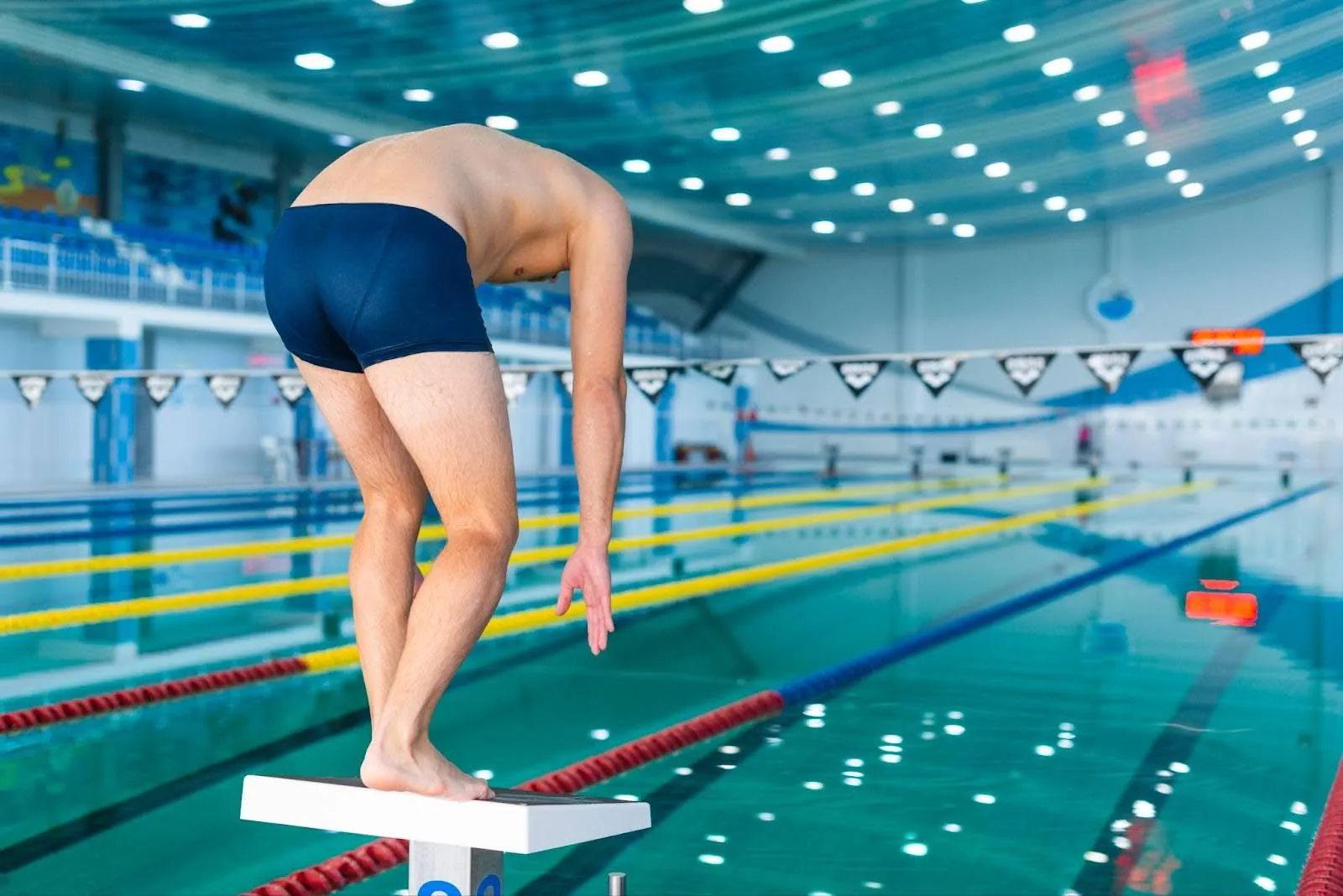
Swimming looks easy when you watch someone who has done it for years. Their arms and legs move in a clean rhythm. Their body stays steady. They glide through the water. But when you try it yourself, it can feel messy. Your legs kick at the wrong time. Your arms feel slow. Your breathing falls out of sync. And the whole thing becomes tiring fast.
The truth is that good swimming is not about strength. It is mostly about coordination. When your arms, legs, and breathing work together, the water feels lighter. Your body feels stable. You waste less energy. And your strokes feel smooth instead of frantic.
In this guide, we’ll talk about the importance of coordinating limbs in swimming properly.
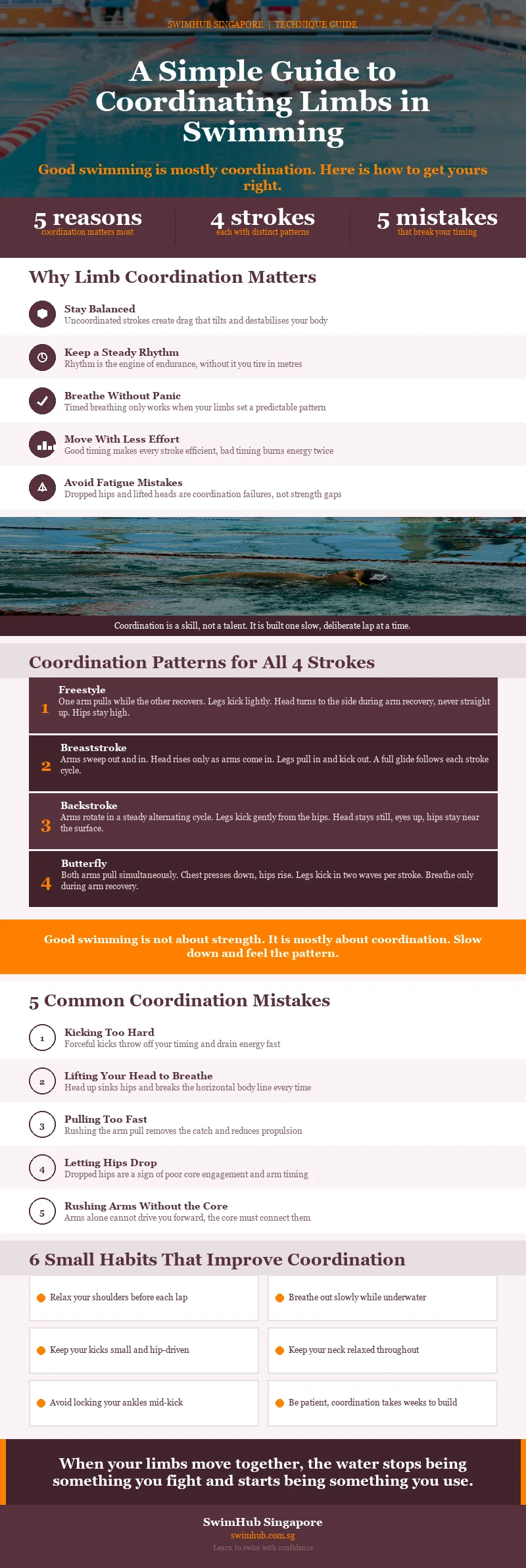
Why Limb Coordination Matters
When you move through water, every part of your body creates resistance. If even one part moves out of sync, it slows you down. Bad timing also makes your muscles work harder than they need to.
Good coordination helps you:
- stay balanced
- keep a steady rhythm
- breathe without panic
- move with less effort
- avoid small mistakes that lead to fatigue
You do not need perfect technique. You only need consistency and calm timing. Even small changes make a big difference.
How Arm and Leg Movements Work Together
Different strokes have different patterns, but the idea stays the same. Your upper and lower body must support each other, not fight each other.
Arms Set the Pace
Your arms do most of the work. They pull the water and move your body forward. If your arms rush or slow down too much, your legs will not follow in a natural rhythm.
A smooth pull creates a steady pace. Once your arms keep a calm cycle, your legs can settle into a consistent pattern too.
Legs Keep You Balanced
Most swimmers think the legs should be powerful. But legs are mainly for balance and small pushes. Kicking too hard breaks your timing and drains your energy.
A gentle, steady kick works best. Focus more on control than force. When your legs stay calm, the rest of your body follows.
Breathing and Body Position
Breathing can ruin your rhythm if you rush it. Most beginners lift their head too high, which drops their hips. This slows them down and ruins the timing of the stroke.
Try to keep your breath relaxed. Turn your head just enough to take air. Do not pause your stroke just to breathe. When you time your breath with your arm cycle, the whole movement becomes smoother.
Your body position also matters. A long, straight line helps you stay stable. Many swimmers use the streamline position in swimming at the start of each push because it reduces drag. Even during normal strokes, that same idea helps your movement feel lighter.
Coordinating Limbs for Different Strokes
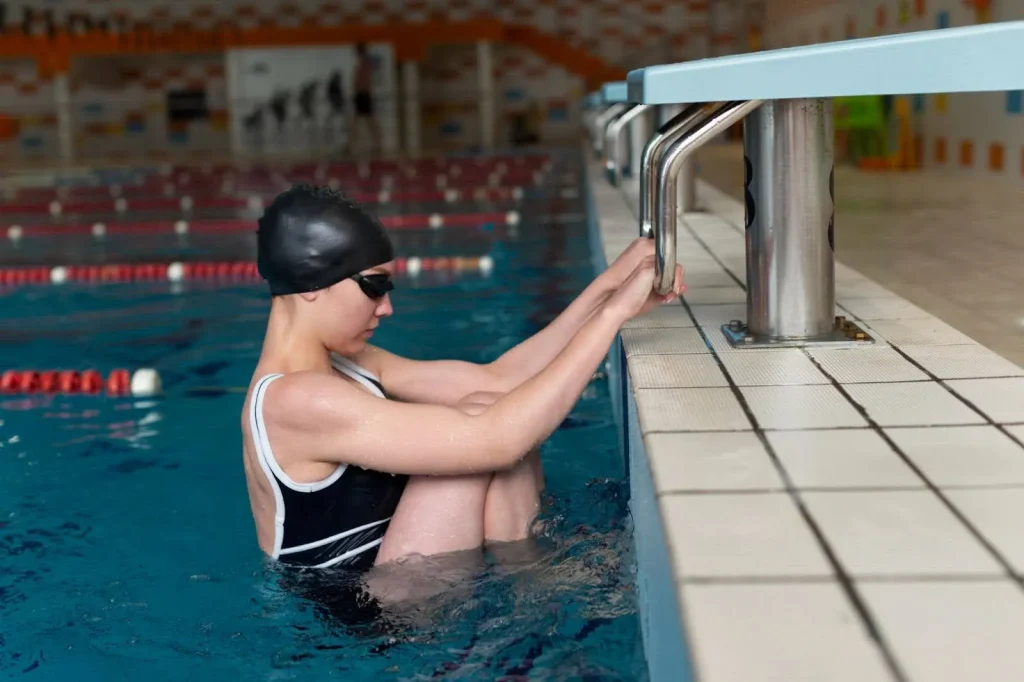
Each stroke has its own rhythm. Here is a simple breakdown of the common ones.
Freestyle
This is the most common stroke. Many call it freestyle swimming because it is the fastest and most used stroke in training.
The key points:
- one arm pulls while the other recovers
- your legs kick lightly and steadily
- your head turns to the side during the arm recovery
- keep your hips high
- avoid lifting the head straight up
The timing feels like a cycle. Arm pulls, head turns, legs kick in the background. Stay relaxed and let the rhythm settle naturally.
Breaststroke
Breaststroke swimming has a wider movement. The timing is slower, but it still needs rhythm. If you move too early or too late, you will sink or lose momentum.
The simple pattern is:
- arms sweep out and in
- head rises as the arms come in
- legs pull in and kick out
- glide
- repeat
The glide is important. Many beginners skip it and rush the next movement, which ruins the coordination. Let the glide happen, even for a small moment, so your body stays balanced.
Backstroke
Backstroke is easier for breathing, but the timing still matters. You cannot see where you are going, so your body must stay stable.
The points to remember:
- keep your hips up
- arms rotate in a steady cycle
- legs kick gently
- keep your head still and eyes up
If your head moves too much, the timing of your arms and legs gets messy. Keep your face relaxed, and let the shoulders rotate instead.
Butterfly
Butterfly is hard because everything moves together. But if you understand the timing, it becomes easier than it looks.
The pattern:
- both arms pull at the same time
- the chest presses down
- hips rise
- legs kick in two waves
- breathe during the recovery of the arms
Many swimmers force the movement and get tired fast. Focus on a smooth wave from chest to feet. Do not fight the water.
How to Practise Coordination in Simple Ways
You do not need special equipment. You only need slow, mindful practice.
Slow the Stroke Down
Swimming fast makes your limbs scramble. Swim slower than usual. Feel how each movement connects to the next. When the rhythm is solid, speed naturally follows later.
Work on One Part at a Time
Pick one thing to fix:
- arm timing
- gentle leg kick
- steady breathing
- keeping the hips high
Trying to fix everything at once will confuse your rhythm. Focus on one point each swim session.
Use Short Laps
Instead of doing long laps, try 25 metres at a time. Rest. Think about how it felt. Then try again. Short swims help your brain build the right timing.
Watch Skilled Swimmers
Seeing the rhythm helps your mind absorb the pattern. You do not need to copy every detail. Just notice the flow.
Preventing Tension and Cramps
Poor coordination often leads to muscle tension. When you panic or move out of sync, your legs tighten. This makes swimming harder and can bring cramps.
To prevent cramps, stay hydrated and stretch your calves and feet before swimming. Stay relaxed in the water. A soft, steady kick is better than a hard one.
Nutrition also helps. Many swimmers eat light foods that support muscle recovery. If you are not sure what to eat after swim sessions, simple choices like bananas, toast, yoghurt, or soup work well.
Small Habits That Improve Coordination Over Time
These simple habits help you build natural coordination.
- Relax your shoulders: Tight shoulders make your arms stiff. A relaxed upper body helps your stroke move in a smoother rhythm.
- Breathe out slowly underwater: Slow bubbles keep your breath steady. It also stops you from panicking when you turn to breathe.
- Keep your kicks small: Big kicks waste energy and break your timing. Small kicks help you stay balanced and steady.
- Keep your neck relaxed: A stiff neck pulls your body out of line. A loose neck helps your hips stay high and stable.
- Avoid stiff ankles: Stiff ankles create drag. Soft ankles help your kicks feel lighter and more natural.
- Stay patient: Coordination builds with practice. Small improvements each swim will add up over time.
Common Mistakes To Avoid
These habits disrupt your timing.
- Kicking too hard: Strong kicks make your body tense and uneven. A gentle, steady kick keeps your rhythm clean.
- Lifting your head high when breathing: This drops your hips and slows you down. Turn your head to the side instead of lifting it up.
- Pulling too fast: Rushing your arms breaks your stroke cycle. Slow, firm pulls create a steady pace.
- Letting your hips drop: Low hips increase drag. Keep your chest relaxed and let your hips float near the surface.
- Rushing the arms without using the core: Arm-only strokes feel frantic. When you engage your core, your whole body supports the movement.
Conclusion On Coordinating Limbs In Swimming
Coordination is at the heart of good swimming. When your arms, legs, breathing, and body position work together, the water feels easier to move through. You do not need to force anything. A calm rhythm is enough. Take your time. Practise small steps. Trust that your body will learn the flow.
If you want help with swimming gear, training tools, or advice, you can contact us at Swimhub. We can guide you towards simple options that support your practice. Visit our site to see what we offer and how our team can help you.
Frequently Asked Questions About Coordinating Limbs in Swimming
How Do I Stop My Arms And Legs From Going Out Of Sync?
Swim slower and focus on one movement at a time. When you force speed, your limbs rush. A calmer pace helps your rhythm settle.
Why Do I Get Tired Fast Even With Good Technique?
You may be kicking too hard or lifting your head when breathing. Both drain energy. Try to keep your movements softer and smoother.
How Do I Keep My Hips From Sinking?
Keep your head low when breathing and use a steady kick. A high head pushes the hips down, so small adjustments help a lot.
Why Is My Breathing Always Late?
Most people wait until they run out of air. Try breathing earlier in the arm cycle so it feels natural, not urgent.
What’s The Best Way To Practise Timing At Home?
Simple core exercises, light stretching, and watching good swimmers help your brain learn the rhythm even outside the pool.
