
Breaststroke is one of the four main swimming styles. It looks gentle and calm when done well. Yet it gives a powerful full-body workout. Many people think that breaststroke is slow. That is true for speed, but not for effort. Because of the way you kick and pull, breaststroke can challenge your legs, hips and core more than some other strokes. It can also lift your heart rate and help you breathe better.
These effects make breaststroke a strong choice for fitness and endurance training. Research and coach guides show that adding strength work and focused swim sets improves performance across distances and builds muscle, too.
In this article, we will explore why breaststroke is great for building strength and endurance. We will explain the main benefits and give simple tips you can use in the pool and on land.
How Breaststroke Works
Breaststroke uses a wide arm pull and a whip kick. The arms sweep out and then scoop inward. The legs pull the heels up, then kick back and together. This pattern repeats with a short glide between each kick and pull. The timing of the kick, pull and glide makes the stroke efficient when done right.
Because the legs do so much of the power, breaststroke is very leg driven. Many studies find that leg strength and leg endurance are important for breaststroke speed and stamina. Training that builds leg power will help you swim better in breaststroke events.
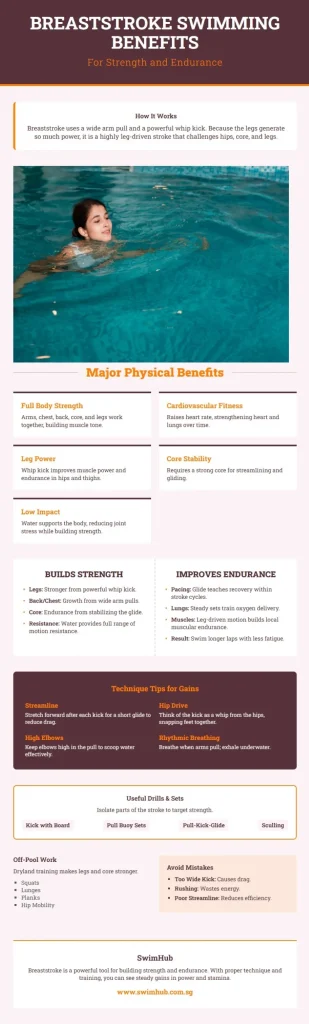
Major Physical Benefits
Breaststroke gives you many physical benefits that help strength and endurance.
- Full Body Strength: The arms, chest, back, core and legs all work together during the stroke. This builds muscle tone and functional strength across the body.
- Cardiovascular Fitness: Repeated cycles of kick and pull raise your heart rate. Over time this makes the heart and lungs stronger. Swimming is great for the heart and for breathing control.
- Leg Power: The whip kick uses hip and thigh strength. This improves muscle power and endurance in the lower body. That helps with sprints and longer swims alike.
- Core Stability: Keeping a good streamlined shape and a steady glide needs a strong core. The core links arm and leg actions and reduces wasted movement.
- Low Impact Training: Water supports the body and lowers joint stress. That means you can build strength and endurance with less risk of injury than many land sports.
These benefits make breaststroke a smart choice for people who want strength and endurance with lower impact on joints.
How Breaststroke Builds Strength
Breaststroke builds strength in slightly different ways than dryland weight training. In the pool you apply force against water rather than a fixed bar. This creates a resistance that works muscles through full ranges of motion.
Coaches and scientists show that adding strength sets in the pool and organized gym work improves swimming power. A mix of in water strength work and dryland training gives good transfer to swim performance.
Examples of how strength develops in breaststroke
- Leg muscles get stronger from the powerful whip kick. This improves single kick power and repeated kicking across a set.
- Back and chest muscles grow from the wide arm pull and the strong finish of each stroke.
- Core muscles gain endurance because they must stabilise the body during the glide and change of direction.
A training plan that mixes technique drills, focused power sets and off pool strength work helps your body build the right kind of strength for breaststroke.
How Breaststroke Improves Endurance
Endurance means the ability to keep a good pace for longer. Breaststroke can help with both local muscular endurance and cardiovascular endurance.
Swimming sets that include steady pacing and repeat efforts teach your muscles to work for longer without fatiguing. Coaches often use intervals that mix speed and recovery to build stamina. Science supports combining endurance and strength training to boost overall swim fitness.
Simple ways breaststroke helps endurance:
- The glide gives short recovery time within each cycle. This teaches efficient breathing and pacing.
- Repeating long sets at a steady pace trains the heart and lungs to deliver oxygen better.
- The leg driven motion builds local muscular endurance in thighs and hips.
The result is that you can swim more laps, or keep a brisk pace, with less fatigue.
Technique Tips To Gain Strength And Endurance
Good technique makes training more effective and saves energy. Here are simple technique ideas to help you get better results.
- Streamline After Each Kick: After your kick and pull, stretch forward in a straight line and hold a short glide. This reduces drag and gives a good rest between efforts.
- Drive From Hips In The Kick: Think of the kick as a whip from the hips. Pull the heels up then sweep the feet back fast and snap together.
- High Elbow Pull: Keep elbows slightly high in the pull. Scoop the water in and press it back to get a solid finish.
- Breathe With The Rhythm: Breathe when your arms pull in and the head naturally rises. Exhale underwater so you are ready to breathe again on the next cycle.
- Small Improvements Count: Change one thing at a time. Practise drills that isolate the kick, the pull, or the glide. Drills help you build muscle memory without tiring fast.
Practising the right technique makes your strokes stronger and your sets last longer.
Useful Drill Examples
Drills let you practise and strengthen parts of the stroke.
- Kick Only With Board: Hold a kickboard and do sets focusing on the breaststroke kick only. This isolates the legs and builds power.
- Pull Buoy Pull Sets: Place a pull buoy between your legs so they float. Swim using arms only to strengthen upper body pull.
- Pull Kick Glide Drill: Do three parts. Pull, then kick, then glide. Each part gets focused work and teaches proper rhythm.
- Sculling Practice: Sculling uses small hand movements to feel the water and improve the catch. Spend 30 to 60 seconds sculling each set to build feel and arm endurance. Use the keyword sculling only once as requested.
Drills like these let you build targeted strength and work on timing.
How To Use Training Sets For Strength And Endurance
Here are sample sets you can try. Start at a comfortable level and scale up as you get fitter.
Strength Set Example
- Warm Up: 200 easy swim mixed strokes.
- Main: 8 x 50 metres breaststroke with full rest between each. Focus on strong kick and full glide.
- Kick Set: 6 x 25 kick with board hard effort.
- Cool Down: 200 easy swim float on your back or slow backstroke to relax.
Endurance Set Example
- Warm Up: 300 easy swim mixed strokes.
- Main: 5 x 200 metres breaststroke at moderate pace with 30 seconds rest.
- Kick Set: 4 x 100 kick moderate pace.
- Cool Down: 200 easy swim and gentle stretches.
These sets aim to increase both strength and stamina over time. The swim term float on your back appears in the cool down to suggest a calm recovery moment.
Off Pool Work Helps A Lot
Working on land matters too. Dryland training helps you make the legs, hips and core stronger. Exercises like squats, lunges, planks and hip mobility drills transfer well to the pool. Over time, they help you kick harder and keep a better body line.
Simple dryland moves to try
- Squats: Bodyweight or light weight to build leg power.
- Lunges: Forward or walking lunges to work hips and thighs.
- Plank: Builds core stability for better streamlines.
- Hip Mobility: Gentle leg swings and controlled rotations help a strong whip kick.
Mix these into your week two to three times. This low time cost can yield big gains in the pool.
Breathing And Lung Benefits
Breaststroke tends to make you breathe more often than freestyle. The rhythm teaches you to inhale at each pull and exhale underwater. This repeated pattern helps lung control and capacity. Over time you may find breathing becomes easier during hard sets. Improved lung function supports longer swims and better recovery.
Nose clips can help beginners focus on mouth breathing and reduce water entering the nose. Try nose clips in controlled drill work only. They can be useful for short times while you learn controlled breathing.
Safety And Injury Prevention
Breaststroke can be kind to joints but technique mistakes can cause pain. The most common problem is poor knee or hip tracking in the kick. If your knees flare out too wide, it can strain the joints. Keep knees aligned and use hip drive.
Warm up well before hard sets and cool down with relaxed swimming after. If you feel pain, stop and check form with a coach or a video. Proper dryland work and mobility help prevent strain.
Using Breath Control To Build Endurance
Controlled breathing gives you efficiency. Try sets that mix breathing patterns. For example do 4 minutes of continuous easy breaststroke with deliberate slow breath timing. This trains your lungs and reduces panic in long swims.
As you adapt you will be able to swim longer steady sets without gasping. This kind of breathing work can be done alongside your strength and kick training.
The Role Of Kick Technique
A refined freestyle kick technique can also help your overall swim coordination and leg strength. Practising other kicks keeps your muscles balanced and reduces overuse. Adding mixed stroke work into your sessions helps hip flexibility and power. When you balance training across strokes you develop better overall swim fitness.
Working on other kicks and drills keeps your training varied and maintains full body balance.
How Masters And Young Swimmers Use Breaststroke
Both young and older swimmers use breaststroke for fitness and therapy. For young athletes it builds base strength and movement patterns. For older adults it offers full body exercise with low impact. Coaches often include breaststroke sets for core and leg focused workouts in team sessions.
If you are training competitively, combine technical breaststroke work with strength sets and dryland sessions for the best results.
Common Mistakes To Avoid
Avoid these pitfalls to make steady progress.
- Too Wide Kick: If you spread knees too wide you lose power and create drag.
- Rushing The Rhythm: Speed without timing wastes energy. Focus on smooth sequences.
- Poor Streamline: Not gliding long enough reduces efficiency. Aim for a stable glide each cycle.
- Neglecting Strength Work: Ignoring land training limits your power gains. Include basic dryland sessions.
Check your stroke regularly and ask a coach for feedback when possible.
Mental Benefits And Why It Helps Stick To Training
Breaststroke can be meditative. The steady rhythm and breathing help calm the mind. This makes training more enjoyable and easier to stick with. When workouts are enjoyable you train more often and gains come faster. That adds to both strength and endurance over time.
Conclusion On Breaststroke Swimming Benefits
Breaststroke is a powerful tool for anyone who wants to build strength and endurance in the water. It uses the legs and core in a special way and helps you get stronger without heavy impact on the joints. By working on technique, adding drills and using some land training we can see steady gains in power and stamina.
We are here to help you on that journey. At Swimhub we offer coaching, training plans and group sessions to fit many goals.
Contact us to learn how our programs can support your swimming progress and strength goals.
Frequently Asked Questions About Breaststroke Swimming Benefits
How Does Breaststroke Help Build Leg Strength?
The whip kick requires strong hips and thighs. Repeating the kick in drills and sets makes those muscles stronger over time.
Can Dryland Training Improve My Breaststroke?
Yes dryland training improves strength and mobility. Exercises for the hips, core and legs carry over directly to a better kick and stronger finish.
Is Breaststroke Good For Cardiovascular Fitness?
Yes. When done in sets at a steady pace breaststroke raises heart rate and improves lung function and endurance.
Should I Mix Other Strokes With Breaststroke?
Mixing strokes keeps training varied and balances muscles. Practising other strokes also improves overall swim fitness and coordination.
How Often Should I Do Technique Drills?
Aim for technique drills two to three times a week. Regular drills help you keep improving and make strength work more effective.
