Swimming is a fun and full-body workout. After you finish your lap sets, drills or sprints, your body has done a lot of work. To help your body bounce back and feel strong again, you’ll want to pick the right foods and drinks.
In this article, we will explore what to eat after swimming to help you refuel, repair and feel ready for the next session.
Why Post-Swim Nutrition Matters
When you practise your different swimming strokes, you use many muscles, your lungs work harder and you lose fluids. That means your body needs fuel and repair material. If you don’t eat properly after you swim, you may feel tired, your next session may feel harder, or you might not swim longer as you hope.
It also helps you build strength and reduce soreness. Research shows that after a training or swim session your muscles need protein to repair and carbohydrates to refill your energy stores.
When swimmers understand why you’re hungry after swimming, they realise that the hunger is a signal: your body used up fuel, it used up energy and now wants to recover.
Knowing this helps you make smart food choices right after you get out of the pool.
The Four Key Things You Need After Swimming
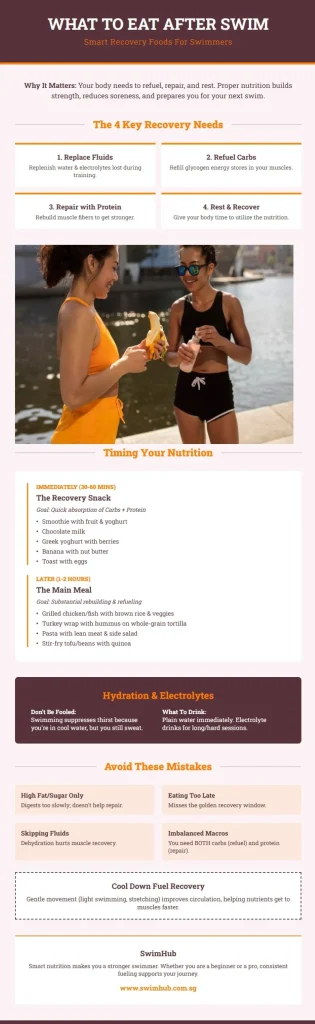
To recover well after you swim you’ll want to cover these four key things:
- Replace fluids and electrolytes – you lose water and salts when you train.
- Refuel with carbohydrates – your muscles have used up “glycogen”, the fuel stored in them.
- Repair with protein – to rebuild muscle fibres and get stronger.
- Rest and recover – nutrition only works if you give your body time to rebuild.
Let’s break down how you can do this with delicious and practical food and drink choices.
What To Eat Immediately After Your Swim
Right after your swim is the best time to eat something. Ideally within 30 to 60 minutes after your session you want a snack or small meal.
At this time your body will absorb nutrients well. Here are some smart choices:
Great post-swim snack ideas:
- Smoothie with fruit + yoghurt : Quick carbs + protein, easy to drink.
- Toast or whole grain bread with eggs : Good blend of carbs and lean protein.
- Chocolate milk : Simple and effective – carbs + protein + fluid.
- Greek yoghurt with berries : Fruit for carbs + yoghurt for protein.
- Banana + nut butter : Carbs, potassium (important for muscles) + some protein.
These options follow the recovery rules: carbs + protein + fluid. Drink plenty of water too.
Meals To Have Later (1-2 Hours After)
Once you’ve had your snack, your next meal (within 1-2 hours) can be more substantial. This meal gives your body a chance to finish rebuilding and refuel fully.
Here are good meal ideas:
- A grilled chicken breast (or fish) with brown rice and vegetables
- A wrap with turkey, salad and hummus on whole-grain tortilla
- Pasta with lean ground meat, tomato sauce and a side salad
- Baked potatoes with cottage cheese, steamed greens and nuts
- Stir-fry tofu or beans, mixed veggies and quinoa
When you pick your meal, aim to get:
- Carbs: whole grains, fruits, starchy vegetables
- Protein: lean meat, fish, tofu, beans
- Healthy fats + colour: olive oil, nuts, seeds, colourful veggies
These choices help your muscles recover well and prepare your body for the next time you head to the pool.
Hydration And Electrolytes
Swimming in a pool might not feel as sweaty as running outside, but you still lose fluids and salts. Your body may also feel cooler in water and that might suppress thirst. That is why you must still drink fluids after swim.
Here are hydration tips:
- Drink plain water right after your session.
- If you trained hard or for long, consider a drink with electrolytes (salt, potassium) to help recovery.
- Weigh yourself before and after training if you want to get precise; for each 0.5 kg lost you might need ~600-750 ml fluid.
- Keep sipping water during your cool down and after your stretch.
Why Cool Down And Easy Movement Helps Fuel Recovery
After your swim session it is helpful to do easy cool down exercises. These gentle activities help clear away waste products in your muscles, reduce stiffness and help your body transition to the recovery phase.
Examples of easy movements: light swimming with easy pace, shoulder mobility drills, leg floats or simple stretches at poolside.
Moving gently while your body is still warm improves circulation so nutrients in your post-swim meal get to where they need to go. This supports the nutrition you just provided.
How Meal Timing Impacts Your Recovery
Timing really matters. If you wait too long to eat, your muscles might start recovering more slowly and your next swim may feel tougher.
Here are timing suggestions:
- Within 30-60 minutes post session: snack or small meal with carbs + protein.
- Within 1-2 hours: main meal with balanced nutrients.
- Throughout the day: keep eating well balanced meals to stay recovered.
When you eat timely and well, you are more ready for your next swim and you are more likely to achieve performance goals.
Special Considerations For Different Types Of Swim Sessions

If you are doing technique work (for example working on your various strokes or doing drills) your fuel needs may be modest. If you are doing a long session, endurance set or racing your demands will be higher.
For very intense or long sessions:
- Use higher carbs (maybe 60g+ for long sessions) and good protein (15-30g minimum) to repair.
- If training twice a day or back to back sessions: recovery nutrition becomes very important so you are ready again.
If you are swimming at a moderate pace or doing swimming for recovery, you still need to eat but you might have slightly lower needs. The key is still carbs + protein + fluids.
Food Ideas To Make It Easy
Here are easy and practical food ideas you can keep ready:
- Overnight oats with milk, chia seeds and berries – good snack or breakfast after morning swim.
- Whole grain sandwich with lean meat or tuna + salad.
- Rice bowl with chicken or beans + veggies + avocado.
- Fruit bowl + yoghurt + nuts.
- Smoothie pack in fridge: banana + berries + milk/yoghurt + a spoon of nut butter.
- Egg and veggie muffins baked ahead will last for days.
These make it easier to have something ready immediately after you finish your session.
How Nutrition Links With Technique And Training
If you train to improve your strokes and technique, you’ll find the right nutrition gives you more energy and better recovery. Good fuel helps you stay consistent in your training.
When you feel good after you eat well, you’ll be more ready for your next training and you’ll have a higher chance of improving how well you swim. This helps you take full advantage of your training, whether you are working on freestyle, backstroke, breaststroke or butterfly.
Why Balanced Food Helps More Than Just One Nutrient
Some people think “just give me protein” or “just give me carbs”. But after swimming, you need both.
Good sources of carbs refill your energy store in muscles. Good sources of protein help repair and rebuild those muscles. Whole foods also bring vitamins and minerals your body uses to stay healthy. If you only have one but not the other the recovery won’t be as complete.
How To Avoid Mistakes In Your Post-Swim Meal
Here are some common mistakes and how to avoid them:
- Choosing foods high in fat or sugar only: these digest slowly and won’t help repair muscles.
- Eating too late after your session: you miss that golden recovery window.
- Skipping fluids: dehydration hurts recovery.
- Not balancing carbs + protein: you may refuel but not repair, or repair but not refuel.
- Ignoring flavour and variety: if food doesn’t taste good you may avoid eating properly.
By being aware you can make better food choices that help you feel better and recover faster.
Learning From Real Swimmers And Coaches
Top swimmers and swimming coaches know nutrition is part of the training. They plan meals like they plan sets in the pool. For example, they might schedule a snack right after the session and a meal soon after that. They also vary their foods so they get many nutrients.
One swimmer said they felt “unusually hungry” after a long pool session and later realised the body was simply asking for refuel. This matches the research on why you’re hungry after swimming.
When swimmers are consistent with what they eat, how they train and how they recover they often perform better and feel better.
Sample One-Day Post-Swim Nutrition Plan
Here is a simple example you could follow:
- Immediately after swim: smoothie (banana, berries, yoghurt), bottle of water
- 1 hour after: oatmeal with milk, nuts and honey
- Lunch: grilled chicken wrap with whole grain tortilla, salad, fruit
- 2-3 hours later: snack of cottage cheese + pineapple or whole grain toast + nut butter
- Dinner: salmon, brown rice, steamed broccoli + side salad
- Before bed: glass of milk or yoghurt + fruit if still mildly hungry
This plan gives you consistent fuel, protein and hydration throughout the day. It supports your body recovering and getting ready for the next day.
Older Swimmers, Younger Swimmers, All Swimmers
Whether you are a young swimmer just starting or more experienced, the same nutrition rules apply. If you are growing (kids and teens) your body also needs extra nutrients for growth. If you are older or training harder your needs may be higher.
Also if you are trying to achieve a goal like improving your endurance, you might combine these nutrition ideas with training that helps you swim longer. The food you eat after swim will support that goal.
Putting It Together: Recovery plus Movement

The full recovery puzzle includes your post-swim meal, fluids, rest and gentle moves. The easy cool down exercises help your body shift from hard training to recovery mode. By combining movement, food and rest you set your body up for success.
For example after you swim you do a 5-minute gentle swim or float, then have your recovery snack and hydrate. Then later you full meal and a normal rest. This full process helps your body bounce back better.
When To Seek Help
If you feel very tired all the time after swim, or you are not improving despite training, you might want to talk with a dietitian, a trusted coach or a physician. Good nutrition may help, but so does healthy sleep, managing stress and good training schedules.
Also, if you experience frequent cramps or fatigue you should check what you are eating, how much you are resting and how well you are hydrating. Good post-swim meals can prevent many of those issues.
Conclusion on What To Eat After Swim
Choosing the right foods after you swim is one of the smartest things you can do. With the right snack and meal you help your body refuel, repair and rest. That means you’ll feel better, train better and be more ready for your next session.
If you want expert help and programs to support your swimming journey visit Swimhub. Our team can support you with training plans, nutrition tips and community encouragement.
Contact us today to learn more.
Frequently Asked Questions About What To Eat After Swim
How Soon Should I Eat After My Swim Session?
You should aim to eat a snack within 30-60 minutes after you get out of the pool. This helps your body take in nutrients more efficiently.
What Are Good Protein-And-Carb Foods To Pick For A Post-Swim Meal?
Good choices include things like yoghurt with fruit, eggs on toast, lean meat with rice, and smoothies with milk and berries. They combine both carbs and protein effectively.
Can I Just Drink A Sports Drink Or Protein Shake After Swimming?
While sports drinks and shakes can help, it’s better to eat whole foods, because they provide more vitamins, minerals and better quality nutrients. Everyday foods are usually enough.
What Happens If I Skip Eating After My Swim Practice?
If you skip a proper meal or snack after swimming, your muscles may not refuel properly, you might feel tired or slower, and you may struggle in your next session.
Does Eating After A Swim Help Me Perform Better In My Next Session?
Yes. When you feed your body well after training by refuelling, repairing and rehydrating, you are more ready for your next swim. It helps you improve and feel stronger.
