
A lot of people say swimming makes you stronger and healthier. You hear comments like “swimmers rarely get sick” or “water training keeps your body tougher.” Some people even ask a simple question again and again. Does swimming boost immune system or is it just a nice idea people repeat?
If you are trying to take better care of yourself, you might want a clear answer. You might also want to know why swimming seems to help many people feel better, sleep better, handle stress better, and stay more active.
In this guide, we’ll talk about how swimming can support your immune system and your general health.
How Swimming Affects Your Body
Swimming is gentle on the joints, uses almost every muscle, and helps your heart work in a steady rhythm. You move your arms, legs, and core without putting stress on your knees or lower back. This is why people recovering from injuries often return to water first. It feels safe.
Your immune system reacts well when your body stays active but not overloaded. Swimming fits that perfectly. It boosts circulation. It relaxes tight muscles. It calms your mind. It gives you steady exercise without pushing your body to the point of exhaustion.
Some people add swimming to their list of the best hobbies to start because it fits all ages, all fitness levels, and improves many areas of health.
How Swimming Supports the Immune System
Your immune system is always working. It protects you from viruses, bacteria, and infections. When your lifestyle stays balanced, your immune system stays stronger. Swimming helps this in a few ways.
Improves Blood Flow
Good circulation helps immune cells move through your body with less effort. Every pull and kick increases your blood flow.
Lowers Stress Levels
Stress weakens immunity. When you swim, your breathing slows. Your mind quiets down. You feel lighter. This calm state is good for your body and your immune system.
Supports Better Sleep
A good night’s sleep helps your cells recover. Many swimmers sleep deeper because the water relaxes the body.
Strengthens Muscles And Heart
Your muscles burn energy and get stronger, which helps your overall health. A healthy body supports a healthy immune system.
Helps Your Lungs Work Better
Breath control in the water is gentle training for your lungs. Some swimmers also practice bilateral breathing, which helps with rhythm and steady airflow.
All these things help your body stay balanced. When your body stays balanced, your immune system stays more prepared.
Is Swimming Enough To Make Your Immune System Stronger?
Swimming helps, but it cannot replace sleep, food, hydration, and stress management. Think of it as support, not a cure. You will not become “immune to sickness” just because you swim twice a week. But you can become healthier overall, and that alone helps your immune system work at a better level.
How Often Should You Swim To Support Your Health?
You do not need to swim every day. Even two or three sessions a week help your body maintain a healthy routine.
Here is a simple guide:
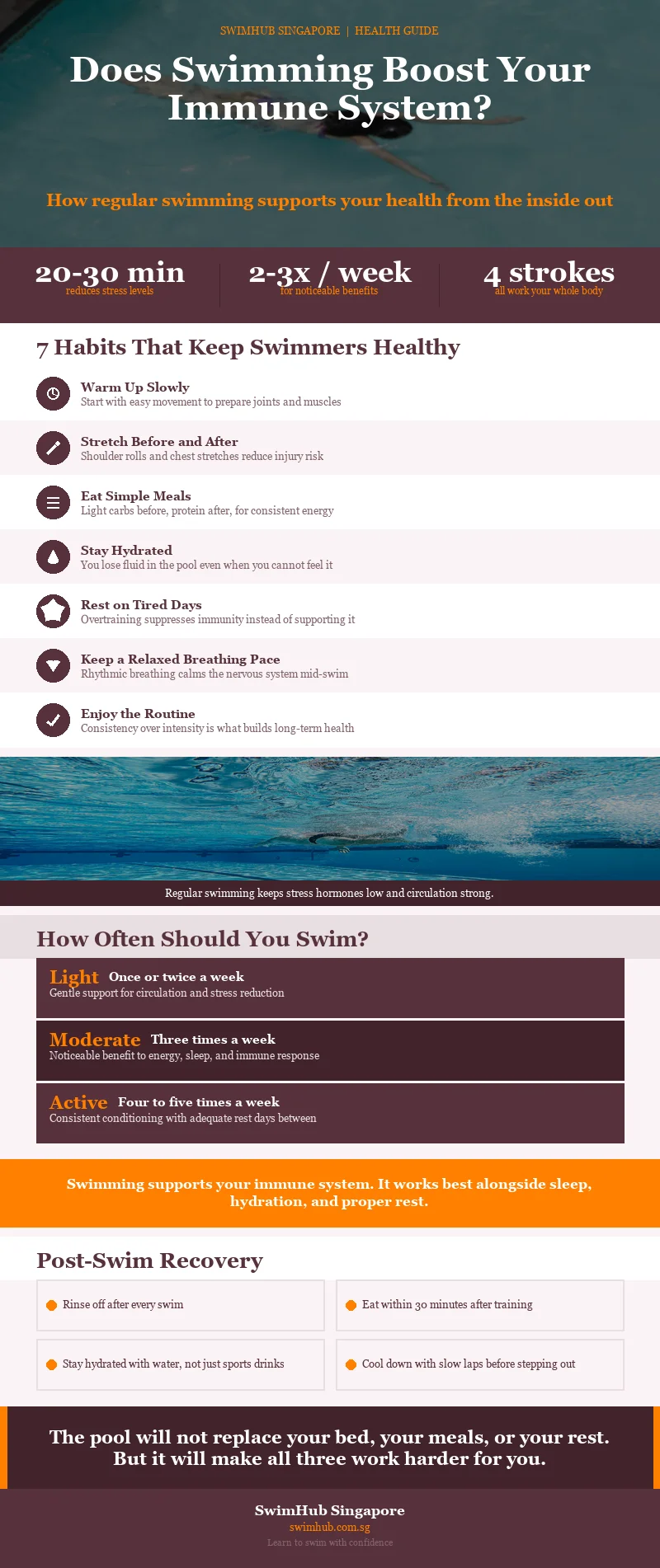
- light swimmers: once or twice weekly
- moderate swimmers: three times weekly
- active swimmers: four to five times weekly
You do not need long sessions. Even 20 to 30 minutes of calm swimming helps your body release stress and stay active.
Types Of Swimming That Help Your Body
You can choose any stroke you like. Every stroke supports your body in a different way. Some strokes feel easier. Some feel stronger. You do not need to master all of them. You only need the one that fits your pace and comfort.
Freestyle
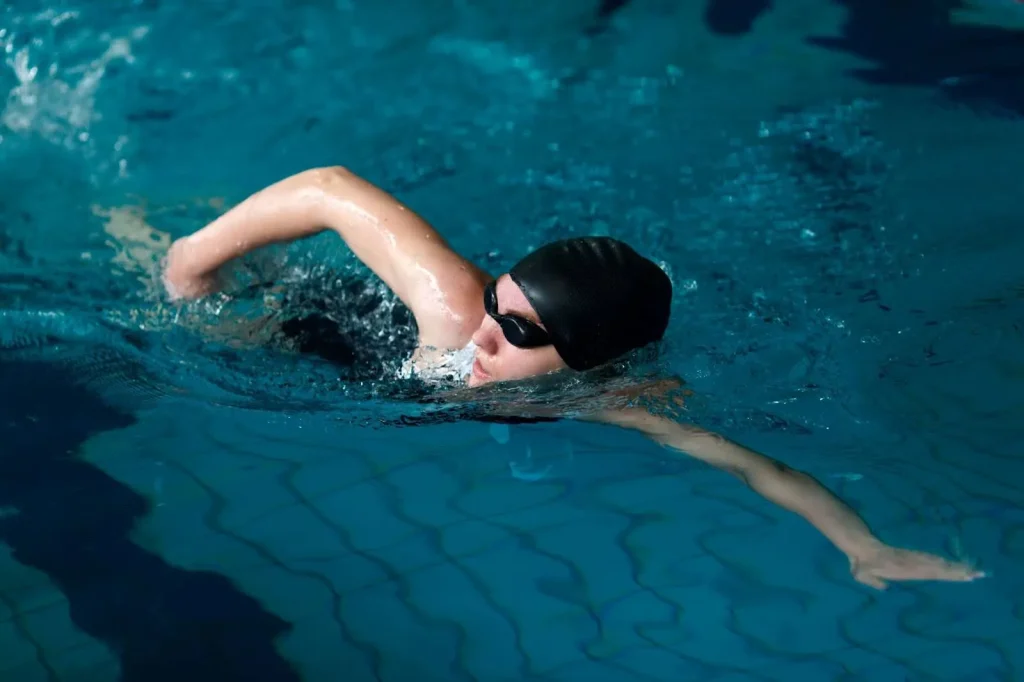
Freestyle is the stroke most people learn first. It is smooth, steady, and easy to adjust. You can swim slow or fast without losing your rhythm. It works your shoulders, arms, core, and legs in a balanced way. Many swimmers like it because it feels natural once you get used to the movement.
You can also work on your freestyle kick technique to make your legs feel lighter in the water. Small, controlled kicks help you glide without wasting energy. This makes the stroke easier on days when you feel tired.
Breaststroke
Breaststroke is gentle and calming. It moves at a slower pace, which is great if you want a relaxed swim. People who like steady breathing often prefer this stroke because the movement feels soft and controlled. It also helps you focus on timing between your arms and legs.
If you get tired easily or feel tight around the chest or shoulders, breaststroke can help you settle into the water without pressure.
Backstroke
Backstroke is a good choice when your body feels stiff. Your face stays above the water, so the breathing is simple. The stroke helps open your chest, relax your shoulders, and release upper-body tension.
Many swimmers use it as a recovery stroke during long sessions because it keeps the body moving but does not feel too heavy. It also helps improve posture because it teaches your body to stay long and straight in the water.
Butterfly
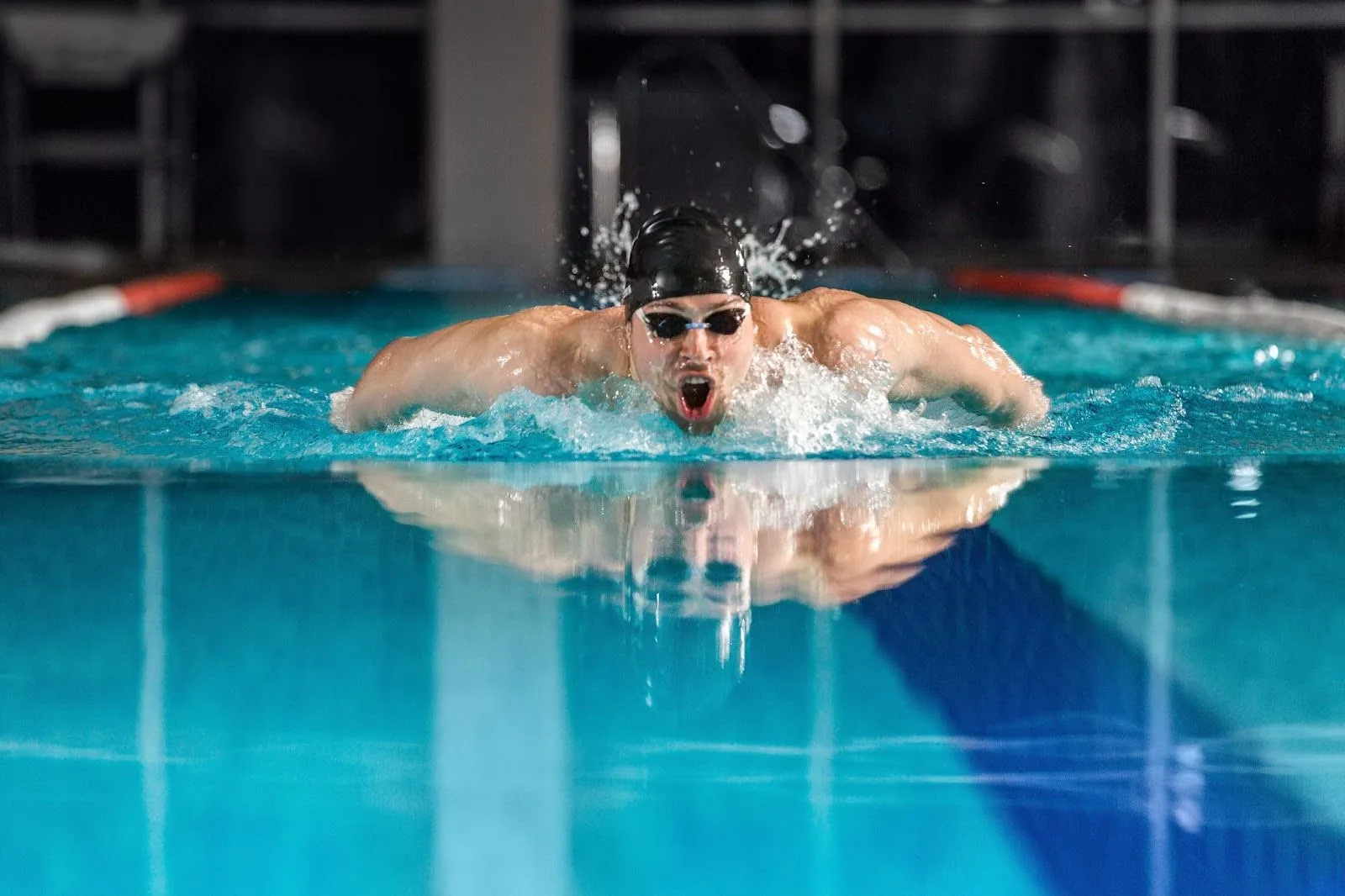
Butterfly is the strongest and most demanding stroke. It works your arms, chest, back, core, and legs all at the same time. You move in smooth waves, which feels powerful once you learn it.
But you do not need butterfly for general health or casual swimming. It requires more practice and more energy. Some swimmers enjoy it for short sets when they want a challenge, but it is not required for building a healthy routine.
Building Endurance In The Water
A stronger heart supports immunity, and the water helps you train your heart without too much stress. Some swimmers choose to swim to improve endurance because it feels smoother than land exercises. You can build endurance by swimming slowly for longer periods or increasing your laps little by little each week.
You do not need speed. Consistency helps more than intensity.
Simple Things That Help You Stay Healthy While Swimming
Your immune system does not just react to exercise. It reacts to how you care for yourself in general. Here are simple routines that support you.
Rinse Off After Swimming
Chlorine can irritate the skin if you leave it too long. A quick shower helps you stay comfortable.
Eat After Training
Your body needs energy to recover. Many swimmers keep something simple after a session. Nothing heavy. Just enough to refill your energy so your body stays strong.
Stay Hydrated
People forget to drink because they do not feel sweaty in the pool. But you still lose water. Dehydration affects your immune system.
Cool Down Slowly
A slow walk in the shallow area or gentle stretching helps your body shift from active mode to rest mode.
Avoid Overtraining
Too much swimming can exhaust you. When you feel very tired, rest. Your immune system needs a break.
Does Swimming Help With Mental Health Too?

Yes. A calm mind supports a healthy immune system. Swimming gives you a quiet space away from noise, screens, and stress. The water feels calming. Your breathing becomes steady. Your thoughts slow down. This is one of the reasons many people choose it as a long-term routine.
Some even learn how to tread water just to enjoy a calm moment in the deep end without swimming laps. Little skills like this help you feel more comfortable and confident in the water.
Small Habits That Help You Stay Healthy As A Swimmer
These simple habits keep your body supported.
- warm up slowly
- stretch your shoulders before and after
- eat simple meals
- stay hydrated
- rest on days when you feel too tired
- keep a relaxed breathing pace
- enjoy the routine
Swimming should feel like a lifestyle, not a strict workout plan.
Conclusion On Does Swimming Boost the Immune System
So, does swimming boost the immune system? It helps support it in many ways. Better sleep, steady movement, calm breathing, and lower stress all improve your body’s natural defences. Swimming cannot replace rest and nutrition, but it strengthens the foundation your immunity needs. It helps you stay active without hurting your joints. And it keeps your mind and body in a balanced rhythm.
If you want help choosing the right swim gear or tools that can support your training, you can check out Swimhub. We offer simple and useful options for swimmers of all levels. Contact us to see how our team can help you stay active and comfortable in the water
Frequently Asked Questions About Does Swimming Boost the Immune System
How Often Should I Swim To Support My Immune System?
Most people feel benefits from swimming two to three times weekly. You do not need long sessions. Short, steady swims help your body stay balanced.
Can Swimming Help Reduce Stress That Weakens Immunity?
Yes. The water naturally slows your breathing and calms your thoughts. This helps reduce stress, which supports your immune system.
Is It Okay To Swim When I Feel Slightly Run Down?
If your symptoms are mild, swimming slowly may help you feel better. But if you feel feverish or very weak, rest first.
Does Chlorine Affect My Immune System?
Chlorine does not harm your immunity, but it can irritate your skin if you do not rinse off after swimming. A quick shower solves this.
Is Swimming Better For Immunity Than Other Exercises?
Not always. But swimming is gentle and easier to keep up long term, which helps your overall health and supports a steady immune system.
