

If you’ve ever watched experienced swimmers glide through the water and thought, “How do they breathe so smoothly?”, you’re not alone.
Breathing is one of the trickiest parts of swimming, and it messes with more people than you’d think. That’s where bilateral breathing comes in. It’s a simple technique that makes a huge difference once you get the hang of it.
So, let’s break it down. What exactly is bilateral breathing? Why do swimmers use it? And how can you start doing it without gasping like a goldfish out of water?
What Is Bilateral Breathing in Swimming?
Here’s the quick version: Bilateral breathing means breathing on both sides while swimming, usually every three strokes.
Instead of turning your head to the same side each time, you alternate. Left, right, left… like a rhythm. It helps balance your stroke, keeps your neck from tightening up, and gives you better control overall.
And no, it’s not just for pros. Even beginners can use bilateral breathing as part of their training, especially in freestyle.
Why Is Bilateral Breathing Helpful?
Let’s be honest. Breathing is one of those things you don’t notice until it goes wrong. Swallowing water mid-stroke? Not fun.
Here’s how bilateral breathing makes things easier:
- It balances your stroke. Always breathing to one side? Your technique can get lopsided. Bilateral breathing smooths things out.
- It improves body rotation. You twist naturally in freestyle. Breathing evenly helps you rotate both sides instead of favouring one.
- You see more. Breathing on both sides lets you spot other swimmers or lane markers on either side.
- It keeps your neck happy. Constantly turning one way can strain your neck and shoulders. Switching sides gives muscles a break.
- It prepares you for open water. In triathlons or open water swims, conditions change constantly. Waves, sunlight, and other swimmers. Breathing on either side is super useful.
Basically, it makes you a smarter, more adaptable swimmer. And isn’t that the goal?
When To Start Using It
If you’re still figuring out how to breathe while swimming without feeling like you’re drowning, hold off a bit.
Start with single-sided breathing. Get comfortable turning your head, timing your breath, and exhaling underwater. Once that feels easy? That’s the moment to try bilateral breathing.
The key is not to rush. Trying to do too much too soon usually ends with frustration and water up your nose.
How to Practice Bilateral Breathing

Here’s a simple drill to start:
- Swim freestyle. Count each arm stroke.
- Breathe on stroke 3, 6, 9… (every third stroke).
- Exhale underwater. Don’t hold your breath; let it out slowly through your nose.
- Keep your body rotating evenly with each stroke.
Not working? That’s okay. Try a pull buoy between your legs. It keeps your body higher in the water and makes breathing a little easier.
And yes, if you’re struggling with water getting in your nose, nose clips can help while you’re learning. Some swimmers love them. Some hate them. Totally up to you.
Bilateral vs. One-Side Breathing
Here’s the deal: not every swimmer uses bilateral breathing all the time. Some elite swimmers breathe to one side during speed races. Others breathe every stroke. It depends on the race, the swimmer, and the strategy.
But in training? Bilateral breathing is gold.
Even if you don’t use it in every lap, mixing it in helps balance your form. Think of it as cross-training for your lungs.
What If It Feels Weird?
It will feel weird at first. Most people have a dominant side. You probably feel smoother breathing to one side than the other.
That’s normal.
Just give your “awkward side” more practice. Try drills like:
- 3-3-3 breathing: Three strokes breathing right, three strokes breathing left, three strokes bilateral.
- Catch-up drill: One arm strokes at a time, helps slow things down.
- Kickboard breathing: Hold a kickboard with both hands and practice turning your head to both sides while kicking.
Start slow. Stay relaxed. You’re retraining your body, so give it time to adjust.
Can You Use It in All Swimming Strokes?
Short answer: not really.
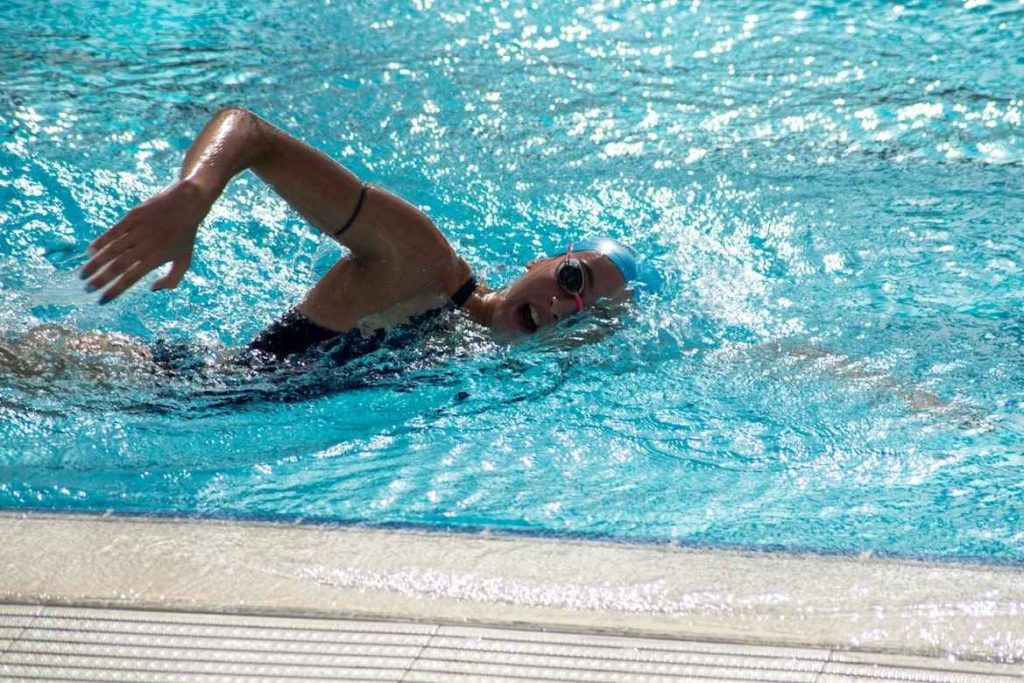
Bilateral breathing mostly applies to freestyle (front crawl). That’s where head turns are built into the rhythm of the stroke.
Other types of swimming strokes, like backstroke, breaststroke, or butterfly, have their own breathing patterns:
- Backstroke: Face is always up, so you breathe anytime.
- Breaststroke: Breathe every stroke when you lift your head forward.
- Butterfly: Most swimmers breathe every other stroke or every stroke forward.
So while bilateral breathing isn’t for every stroke, it’s definitely a key skill in freestyle.
Conclusion On What Is Bilateral Breathing In Swimming
Bilateral breathing isn’t just a fancy technique for elite swimmers. It’s a simple habit that makes a big impact, better form, more balance, and smoother breathing.
It may feel awkward at first, but once it clicks, swimming becomes more fluid and more fun. Try it for a few weeks and see how your freestyle changes.
Want pro tips and guided swimming lessons in Singapore that cover breathing techniques and more? SwimHub offers expert coaching in Singapore for all ages and skill levels. Learn everything from basic strokes to advanced drills in a supportive, safe environment.
Contact us to get started.
Frequently Asked Questions About What Is Bilateral Breathing In Swimming
What Is the Main Benefit of Bilateral Breathing?
It helps balance your freestyle stroke, improves body rotation, and reduces muscle strain on one side. Plus, it preps you for open water swimming.
Is Bilateral Breathing Better Than Breathing to One Side?
Not always better, but definitely helpful. Many swimmers use bilateral breathing in training and then switch to one-sided breathing during races or sprints.
Can Beginners Use Bilateral Breathing Right Away?
Not usually. It’s better to first master how to breathe while swimming consistently on one side before adding bilateral breathing into the mix.
Do Nose Clips Help With Bilateral Breathing?
They can. Some swimmers use nose clips to stop water from going up their noses during breathing drills, especially when learning new techniques.
Which Types of Swimming Strokes Use Bilateral Breathing?
Mainly freestyle. Other types of swimming strokes, like breaststroke or backstroke, have different breathing patterns that don’t use bilateral rotation.
