
Being a lifeguard is more than just sitting in a tall chair by the pool or beach. It is about being ready, alert and responsible so that people stay safe around water. A lifeguard must know what to do, when to act and how to keep others safe.
In this article, we’ll look at ten important qualities of a lifeguard that really matter.
What Does A Lifeguard Do
Before we dive into the qualities, let’s make sure we know what a lifeguard does. A lifeguard watches over swimmers, enforces safety rules, inspects equipment and rescues people in danger.
They can be at a pool, water park, beach or lake. Their job involves vigilance, strength and quick thinking.
Qualities That Matter
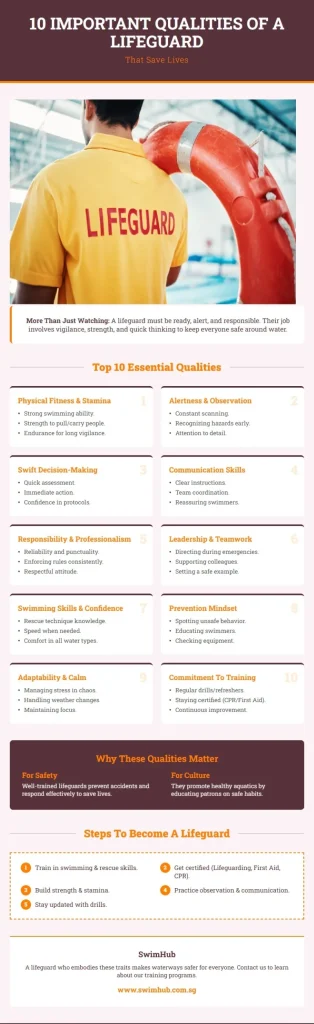
1. Physical Fitness And Stamina
A good lifeguard must be in strong physical shape. They may need to swim fast, carry someone, or act in a long shift without losing focus. One article on lifeguard skills tells us that strength, endurance and fitness are essential.
- Physical strength: To pull a person out of water or handle rescue equipment.
- Stamina and endurance: To remain vigilant all day, even if you just finished a rescue.
- Swimming ability: A lifeguard must be comfortable in the water and capable of swimming hard when needed.
This quality links to training, too. Lifeguards who regularly practise and work on fitness will be better prepared to act. If you plan to increase stamina for lifeguarding, doing specific swim sets, endurance work, and dryland strength helps.
2. Alertness And Observation
One of the most important qualities is simply being alert. A lifeguard who is watching can spot trouble before it happens. According to some lifeguard communities, attention to detail and vigilance are key.
- Constant scanning: Watching swimmers, pool edges, and changing conditions.
- Recognising hazards: Knowing when a swimmer is in trouble or when equipment is unsafe.
- Preventing problems: A good lifeguard acts before an incident becomes serious.
By staying alert, you help ensure that you catch small issues and handle them early. This kind of prevention is part of the job.
3. Swift Decision-Making
Emergencies often happen fast. A lifeguard must decide what to do quickly and act with confidence. Good decision-making is a top trait.
- Assess quickly: Understand what is happening and what help is needed.
- Act immediately: Jump into rescue or assist someone before things escalate.
- Follow procedure: Use training to guide correct actions.
Because timing matters, lifeguards train to react quickly and follow lifeguard rescue protocols.
4. Communication Skills
Lifeguards don’t only act, they also talk. They give instructions, warn swimmers, coordinate with other staff and may call for help. Communication is a major quality.
- Clear instructions: “No running”, “Stay within this zone”, “Swim back slowly”.
- Working with teams: Communicate with other lifeguards, supervisors, and first aiders.
- Reassuring swimmers: Calm someone who is panicking or in trouble.
Good communication helps them manage both day-to-day safety and emergencies.
5. Responsibility And Professionalism
A lifeguard must take their role seriously. People’s lives and safety depend on their work. Quality articles say reliability, professionalism and mature behaviour are essential.
- Punctuality: Being on time and ready for duty.
- Following rules and procedures: Enforcing safety rules, doing checklists.
- Good attitude: Staying calm, respectful and consistent.
This quality ensures the environment remains safe and trusted by swimmers.
6. Leadership And Teamwork

Even when a lifeguard is alone at a station, they need to act like a leader and be part of a team. Leadership shows when they direct others, organise rescues or coordinate during emergencies. Teamwork means they support other lifeguards and share responsibility.
- Leading during emergencies: Guiding swimmers, giving instructions, staying in control.
- Supporting teammates: Covering duties, sharing information, and helping less experienced staff.
- Setting example: Showing safe behaviour and professionalism.
This quality helps build a strong and safe aquatic environment.
7. Good Swimming Skills And Water Confidence
A lifeguard must be a strong swimmer. They need to trust the water, know how to rescue, and use swimming skills effectively. Articles emphasise swimming ability as key.
- Swim fast when needed: To reach someone in trouble.
- Rescue techniques: Know how to carry or support swimmers safely.
- Water confidence: Feeling comfortable in all water conditions.
If a lifeguard doesn’t have good swimming skills, their ability to perform is compromised. This links to training and practise.
8. Prevention Mindset
A great lifeguard is not just reactive, they focus on preventing incidents. By spotting unsafe behaviour and correcting it early, they reduce risk. This prevention mentality is often cited.
- Enforce safety rules: No diving in shallow parts, no running on deck.
- Educate swimmers: Explain risks and proper behaviour around water.
- Maintain environment: Check equipment, monitor weather or conditions.
Prevention keeps swimmers safe and lowers the number of emergencies.
9. Adaptability And Calm-Under-Pressure
Water environments change quickly: weather, crowds, lighting. A lifeguard must stay calm and adapt. They must keep focus when things get chaotic.
- Stay calm in emergencies: Manage stress and make clear decisions.
- Adapt to changes: Sudden weather, wave surges, equipment failure.
- Maintain vigilance: Even when things seem quiet.
This quality ensures they stay effective even under pressure and uncertain conditions.
10. Commitment To Training And Improvement
Finally, the role of a lifeguard is not static. Ongoing training, certification and improvement are key. Lifeguards must stay up to date with rescue techniques, first aid, CPR and facility rules. Careers Wales+1
- Regular drills and refreshers: Practice rescues, maintain skills.
- Fitness upkeep: Work at fitness and swimming drills to improve.
- Stay informed: New procedures, equipment or safety research.
This commitment ensures that the lifeguard is always ready to act safely and efficiently.
How These Qualities Fit Together
When a lifeguard combines these ten qualities, they become a strong protector of swimmers and water users. For example, they use good swimming ability and fitness when they do a rescue. They use observation and prevention to stop issues before they begin. They communicate clearly to manage a situation. They stay calm and adapt when things change.
If you want to be a better swimming lifeguard (or aspire to become one), focusing on developing these qualities will help a lot. Many lifeguards also do regular workouts in the water and on land, including easy cool down exercises after their shift to recover and stay fit. This kind of routine helps maintain health and readiness.
Steps To Become A Lifeguard

While this is not a full certification guide, here are the general steps to be a lifeguard that you can follow:
- Train in swimming and rescue skills.
- Get certified in lifeguarding, first aid and CPR.
- Build strength, stamina and fitness to handle rescues.
- Practice observation, communication and leadership skills.
- Stay updated with training, drills and safety procedures.
These steps lead to a competent lifeguard who is prepared for duty in water and around vulnerable swimmers.
Why These Qualities Matter For Safety
Lifeguards protect lives. When they perform well, fewer accidents happen. When they fail to act, the consequences can be severe. The role requires a combination of physical, emotional and mental qualities.
For instance, a strong swim-capable lifeguard with good vision and a prevention mindset might avoid a drowning by spotting a child in trouble early. These are more than common swimming mistakes for recreational swimmers; they become dangerous incidents if not addressed. A well-trained lifeguard reduces risk and helps others enjoy the water safely.
Lifeguard Role In Promoting Healthy Aquatics
Beyond rescue, lifeguards promote water safety culture. They enforce rules, guide new swimmers, and educate patrons. In that sense, they help people enjoy water activities in safe ways, including things like swimming for recovery after competition or swim workouts. A lifeguard who knows about healthy swim habits contributes to overall aquatic wellbeing.
Considerations For Lifeguards On Duty
Being on duty means long shifts, many eyes on you and minimal breaks. Physical and mental training helps. Here are some things lifeguards might do:
- Routine fitness training to maintain physical readiness.
- Scan the water regularly, even if it appears calm.
- Use communication tools like whistles, radios or hand signals.
- Review emergency protocols and equipment readiness.
- Practice hydration, weather awareness and rest.
By meeting these demands, you remain effective and safe in your role.
Conclusion On Qualities Of A Lifeguard
In sum, the qualities of a lifeguard that save lives are many and varied. From physical fitness and swimming ability to alertness, leadership, communication and prevention mindset, each quality builds into a whole. A lifeguard who embodies these traits is ready to act, ready to protect and ready to make waterways safer for everyone.
At Swimhub, we are committed to helping you develop the skills and qualities you need, whether you are training to become a lifeguard or simply want to improve your swim safety knowledge.
We invite you to contact us and learn about our lifeguard training programs, swim lessons and community support.
Frequently Asked Questions About Qualities Of A Lifeguard
What Does It Take To Be A Lifeguard At A Pool Or Beach?
Becoming a lifeguard means more than swimming well. It means being fit, alert, able to respond to emergencies, communicate clearly and maintain safety at all times.
How Do Lifeguards Build Their Stamina And Swimming Ability?
They train regularly with swim sets, rescue drills, dryland workouts and focus on endurance. The goal is to be ready for long periods of vigilance and sudden action.
What Are The Most Common Mistakes Lifeguards Want To Avoid?
Common errors include losing focus, letting distraction creep in, ignoring safety rules and causing fatigue to affect performance. A high-quality lifeguard avoids these by being disciplined and attentive.
How Can A Lifeguard Prevent Injuries While On Duty?
By using the correct rescue technique, maintaining physical fitness, practising easy cool-down exercises after shifts and following safe training routines. This reduces the risk of injury to themselves or swimmers.
How Important Is Rescue Training And Certification For A Lifeguard?
Very important. Lifeguards must be certified in first aid, CPR, rescue skills and often legal responsibilities. Without training, they cannot safely perform rescues or manage emergencies.
