
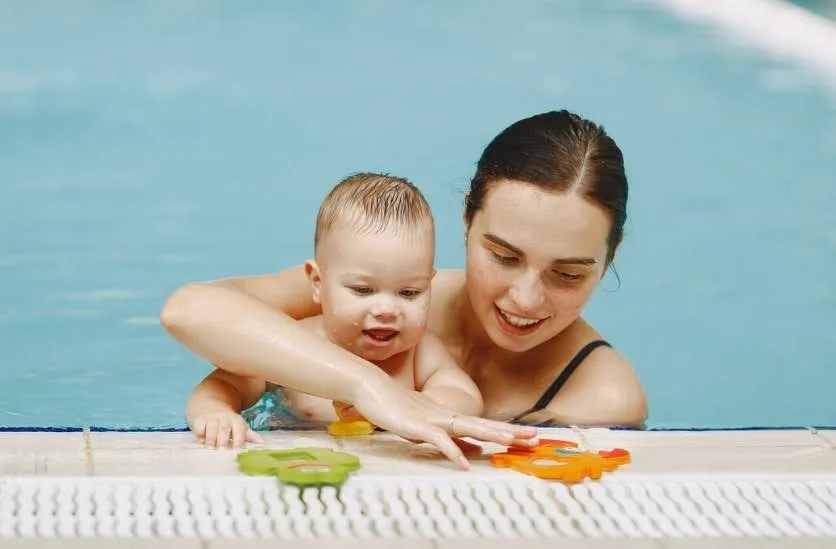
Introducing your baby to water can be a joyful experience for both of you. Swimming together helps build a bond, supports your baby’s development, and introduces early water confidence. At the same time, safety is key; nothing replaces a parent’s full attention.
In this guide, we’ll walk through how infant swimming works, what to expect, how to prepare, and how to keep your baby safe in and around water.
Why Start Infant Swimming
Getting your little one used to the water early can bring many benefits. Research shows that infants and toddlers who participate in swim lessons or water familiarisation often show better motor skills and water confidence compared to children who do not. One study found that infants exposed to water activities had improved balance at age five.
Aside from the physical side, swimming can help build water comfort and reduce fear of water later on. While formal lessons by themselves do not guarantee full safety in all water situations, they are one useful part of a broader water-safe parenting approach.
When Can Babies Begin Swimming
Medical and safety organisations generally suggest that babies wait until they are around 6 months old before going into a pool. The reasons include better head control, stronger immune system and more stable body temperature.
Remember that water and pool chemicals can be challenging for very young infants, so choose a warm and controlled environment.
At the same time, “can babies swim naturally?” is a question often asked by parents. While babies may show reflexes like kicking or paddling, these are not directed or safe swimming abilities. They need adult support, structured environment and full supervision. In other words, these reflexes help but do not replace active supervision or lessons.
What To Expect In Infant Swimming Lessons
Infant swimming lessons are designed to be fun, gentle and focused on water familiarisation rather than full stroke training. The aim is for your baby to feel comfortable in the water, for you to learn safe handling, and for both of you to enjoy the experience.
Typical features of a lesson
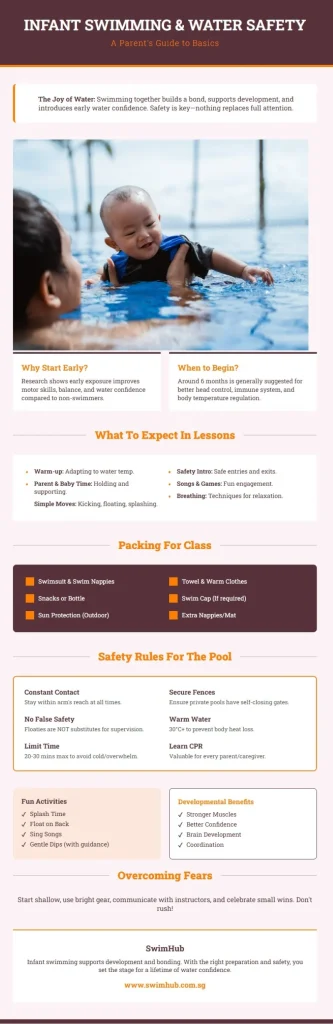
- Warm warm-up: The instructor and parent help the baby adapt to water temperature and feel.
- Parent and baby time: You may hold the baby or support them in the water while the instructor leads activities.
- Simple movements: The baby may kick, float, splash, move arms, hold onto you or toys.
- Water safety introduction: The instructor may cover safe entries, exits, how to support your baby and basic signs of comfort.
- Fun songs and games: These help engagement and drop the stress of “lesson” into play.
During these lessons, you may learn some breathing techniques too, especially for you as the parent supporting the baby and helping them relax in the water.
Preparing For Your First Class
Before heading to the pool you’ll want to pack your bag and prepare both you and your baby for a comfortable session.
What to bring for baby swimming lessons:
- Swimsuit and swim nappies: For your baby both a swim nappy and perhaps a cover will help keep everything tidy.
- Towel and change of clothes: Babies can get chilled, so a warm towel and dry clothes help when you exit the pool.
- Snacks or bottle (if applicable): After a lesson your baby may be hungry or thirsty.
- Swim cap: The instructor may request one for you or baby for hygiene or comfort.
- Sun protection if outdoors: Rash guard, hat, sunscreen for you and baby.
- Extra nappies / change mat: Helpful for before and after the session.
Being prepared helps the session go smoothly and keeps you relaxed so your baby picks up calm cues.
Safety Rules For The Pool Environment
Safety is the biggest topic when we talk about infant swimming. You are the main supervisor. Even when in a lesson your full attention matters.
Key safety points
- Constant close contact: Even in lessons your baby should never be left unattended. Stay within arm’s reach.
- Pool fences and gates: If you use a private pool or spa make sure it is fenced and has self-closing gates.
- Avoid floating toys as safety tools: Toys, floaties or rings are not substitutes for supervision.
- Water temperature: For infants you’ll want a warm pool (around 30 °C or more) so they don’t lose body heat.
- Limit session length: For younger babies keep sessions short (around 20 to 30 minutes) so they don’t get cold or overwhelmed.
- Learn CPR: As a parent or caregiver it’s valuable to learn infant CPR and basic water rescue readiness.
These rules help keep the experience safe and fun.
How The Parent and Instructor Team Works
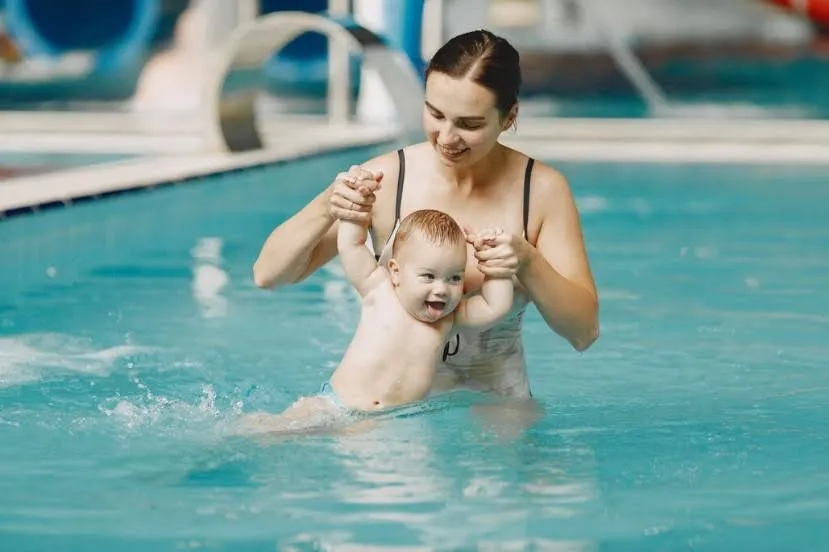
You, your baby and the instructor form the team. The instructor provides structure, cues and safety. You provide the comfort and presence your baby needs. Your calm behavior helps the baby stay relaxed.
Here are some tips to support this team:
- Respond to baby’s cues: If baby is shivering, crying or tired stop the session and warm them.
- Stay calm and positive: Your tone, comfort and body language matter a lot.
- Ask questions: Ask the instructor about recommended home practice, how to hold your baby in the water and how to support them.
- Follow up at home: After the class you can practise simple water familiarisation under your supervision in shallow water or bath time.
Fun Water Activities With Your Baby
Beyond formal lessons you can also explore gentle water play. This makes the routine feel natural and not just “exercise”.
Some ideas:
- Splash time: Let baby kick and splash while you support them at the shallow end.
- Float on your back: You hold your baby securely and float gently on your back together. This builds trust and water feel.
- Sing songs and gentle moves: Use songs about water, loops or baby support while in shallow water.
- Gentle under-water dips: Some parents gently dip baby’s face briefly after proper support (check with the instructor first). This must always be safe and comfortable.
These moments build positive associations with water and support the formal lessons.
Developmental Benefits And Confidence Building
Beyond safety and comfort, infant swimming offers developmental benefits. Studies show early water exposure supports motor skills, balance, and coordination.
Additional benefits include:
- Stronger muscles and joints: Moving in water gives gentle resistance and promotes strength.
- Better confidence in water: Babies get used to water environments and their own movement in it.
- Brain development: Water activities involve coordination between the body and brain, which can support cognitive growth.
When done safely, these activities set up positive behaviour around water and movement.
Overcoming Common Fears And Concerns
It is normal for both parents and babies to feel unsure at first. Water is a new environment. Here are some ways to ease the process:
- Start shallow and slow: Let your baby adjust to water temperature and being held in water before moving to deeper or structured play.
- Use bright, comfortable gear: Bright swimsuits or swim caps help you easily see your baby in water and build a fun vibe.
- Communicate: Let the instructor know your concerns. They can adapt to your baby’s pace.
- Celebrate small wins: Does your baby kick more freely? Sit relaxed in the water? That’s progress.
- Don’t rush: Every baby develops differently. Focus on enjoyment and comfort rather than “swimming 10 metres”.
Transitioning From Parent-Baby To Independent Swimming
As your baby grows into a toddler you will see them wanting to move more independently. The early water time you spent will pay off. When moving toward independent swimming lessons you’ll notice they:
- Have better comfort in water and less fear
- Can practise kicks and simple movements with instructor guidance
- Respond to cues like “float” or “kick” with less help from you
At that stage you may also learn more formal strokes or entry skills. Having used nose clips or other equipment sometimes in toddlers can help them feel comfortable under water safely.
Building Consistency And Routine
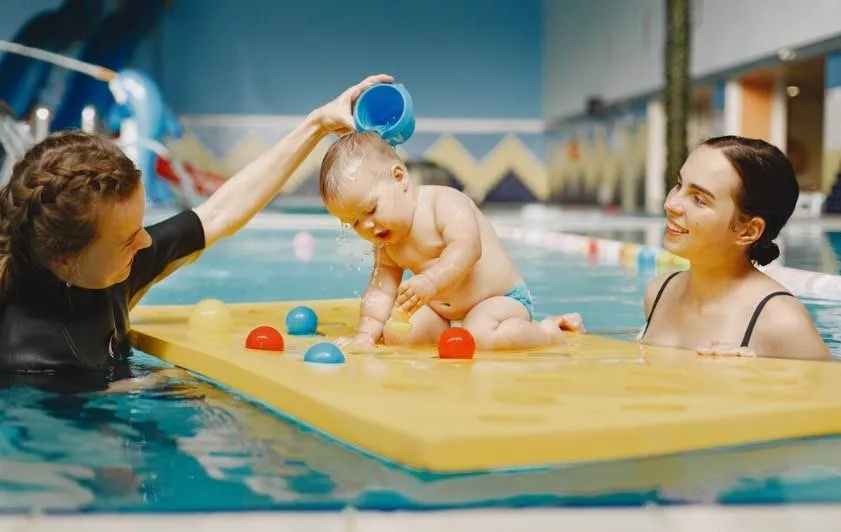
Creating a regular water routine helps your baby build water comfort. Whether it’s once a week infant class or a short splash at home, regular exposure matters.
Tips for a routine:
- Choose the same day/time each week to bring structure.
- After a lesson, praise your baby’s calm behaviour and water tries.
- Keep the session short for younger babies and end while they are still happy.
- At home keep bath time gentle and supportive to keep water feel positive.
Over time you’ll notice consistency building better results and less fuss.
Partnering With A Quality Swim Program
Choosing the right swim program is important. Look for these features:
- Certified instructors with experience in infant and toddler classes
- Warm pool with good hygiene and comfort for baby
- Small class sizes so you stay close to your baby and instructor
- A welcoming environment where parents stay in the water too
- Clear safety rules and supervision practices
A good program supports your journey and makes it easier for both you and your baby to enjoy the experience.
Conclusion on Infant Swimming
Infant swimming is a wonderful way to support your baby’s development, bond with them, and introduce early water comfort. With the right preparation, supervision and choice of class, you set the stage for safe and happy water experiences. We know every baby and parent are different and that’s okay.
At Swimhub, we are here to help you find the right class, understand water safety tips and build your family’s water confidence together.
Contact us to learn more about our infant swimming programs and how we support new families.
Frequently Asked Questions About Infant Swimming
What Are The Key Safety Checks Before Starting Infant Swimming?
Ensure the pool is warm enough, supervise at all times, check that water depth is suitable and ask for a trial class to assess comfort for you and your baby.
How Long Should Each Infant Swim Session Last?
For younger babies start with 20-30 minutes until they show they are comfortable and relaxed. Gradually you may extend time as baby adjusts.
Can I Use Water Toys And Floats In Infant Swimming Lessons?
Toys can make it fun but always stay within arm’s reach of your baby. Avoid float devices that give false safety reassurance and reduce adult supervision.
What Clothing Should Baby Wear For A Swim Lesson?
Use a snug one-piece swimsuit for baby, a swim nappy as required by the pool, a towel for afterwards and consider bringing a lightweight swim cap for hygiene and warmth.
How Do I Know My Baby Is Ready For More Independent Swimming Lessons?
When your baby shows comfort in water, enjoys the splash, can tolerate the class time and follows simple cues, they may be ready to move from parent-baby sessions to toddler or independent swim lessons.
