
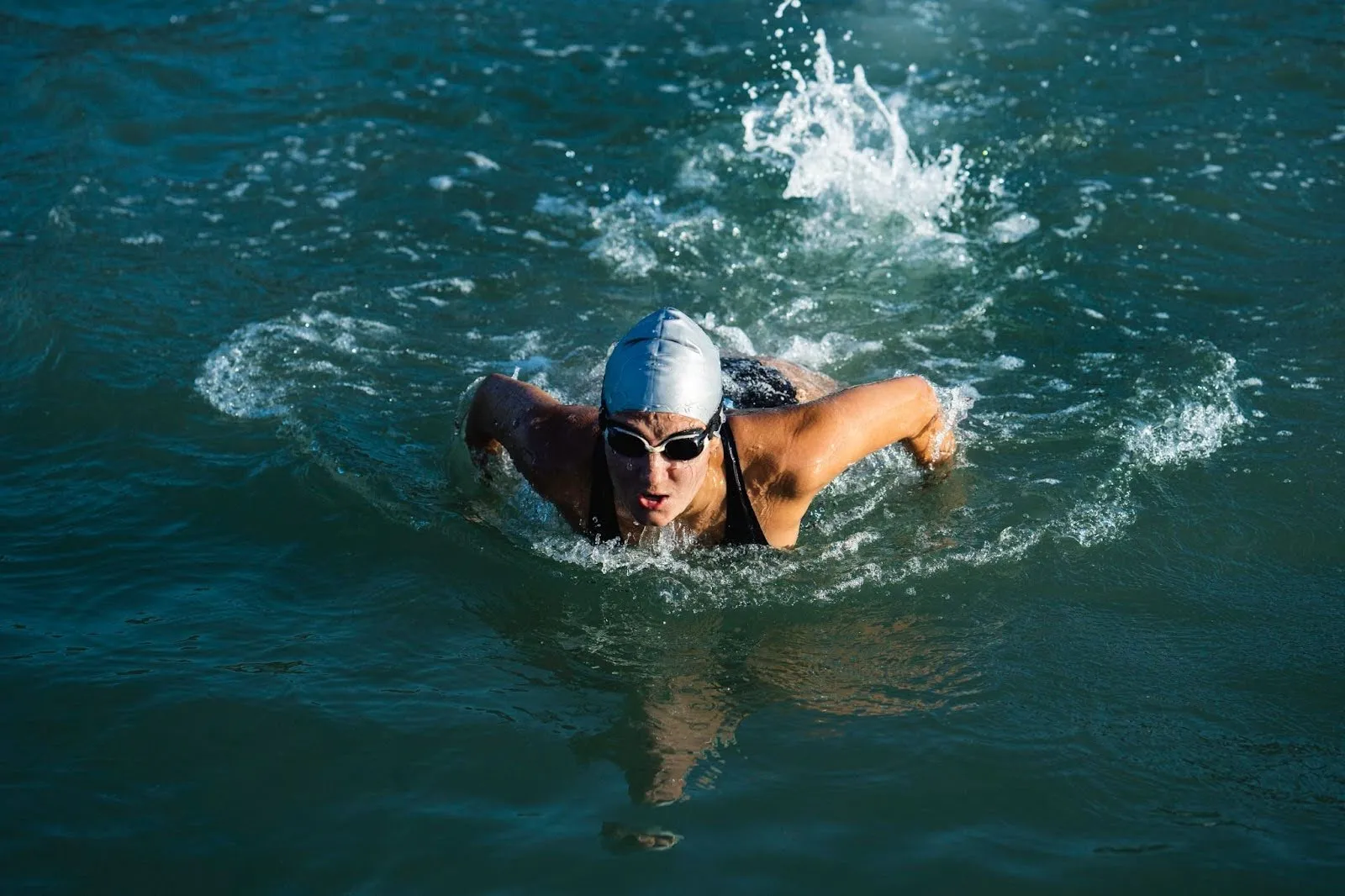
Swimming is a great way to stay fit, have fun, and enjoy the water. Among all the styles, breaststroke swimming offers a unique combination of rhythm, technique, and coordination. It may not be as fast as freestyle or some of the other strokes, but it is powerful when done well.
This article will guide you through how to improve your breaststroke swimming step by step so you can swim more smoothly, confidently and effectively.
Why Breaststroke Matters
Breaststroke is an important stroke for swimmers of all levels. It has its own rhythm and style, with a unique kick and arm motion that differ from other variations you might know such as the front crawl swimming style or backstroke. According to SwimNow, your body position and timing in breaststroke are crucial because this stroke generates most of its propulsion from the legs.
There are many benefits of swimming beyond just moving through water. Breaststroke builds strength in your legs, hips and core. It also trains you to coordinate arms, legs and breathing in one smooth motion. As you improve this stroke, you may notice you can keep going for longer and feel more comfortable in the pool.
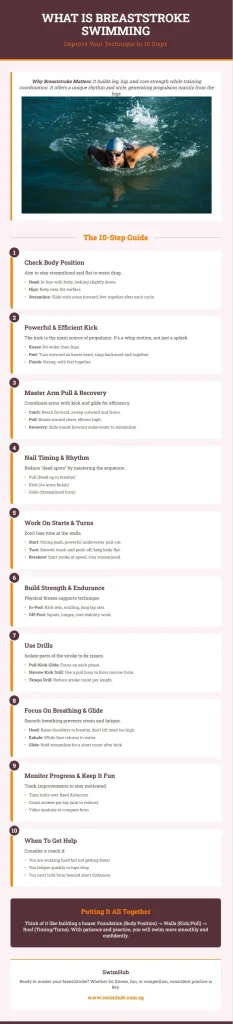
Step 1: Check Your Body Position In The Water
A good body position is the foundation for breaststroke. Your aim is to stay as streamlined and flat in the water as possible so that you resist drag. According to a guide by SwimNow, you should keep your shoulders, hips and legs nearly horizontal.
When your hips drop or your head lifts too much, you slow down and increase resistance.
Here are some key pointers:
- Head position: Keep your head in line with your body and look slightly downwards to maintain a good hip line.
- Hips and legs: Try to keep your hips near the surface and your legs extended behind you for as long as possible.
- Streamline: After each kick or pull, aim for a short glide in a tight streamline position with arms forward and feet together.
Practising these things helps you reduce wasted movement and improve your rhythm.
Step 2: Focus On A Powerful & Efficient Kick
One of the major differences between breaststroke and other swim styles is the importance of the kick. The kick in breaststroke is the main source of propulsion according to experts.
The kick is not simply about splashing water; it is about drawing the heels toward the bottom of your seat, then sweeping the feet backward in a narrow whip motion.
To improve your kick:
- Knee position: Keep knees no wider than your hips to avoid creating too much drag.
- Foot motion: Turn your feet outward as your knees bend, then snap your feet backward and together.
- Finish strong: End the kick with your feet together and your body in streamlined form.
- Kick drill: Try kicking while holding a stationary position or along the wall to isolate and strengthen the kick action.
Better kick technique means you can move more efficiently and maintain a steady pace.
Step 3: Master Your Arm Pull & Recovery
While the kick is vital, the arms still play a key role. The arm motion helps propel you and coordinate with the kick and glide for maximum effect. Swimming.org recommends specific arm actions and timing for breaststroke.
Key arm motion tips:
- Catch phase: Reach forward with hands together slightly under water, then sweep outward and down.
- Pull phase: Pull your hands toward your chest, keeping elbows high and close to the surface.
- Recovery phase: Slide your hands forward under the water (or slightly above) to return to the starting position.
- Timing: The arms should complete their action just before or as the kick finishes, so there is a smooth flow into the glide.
When your arm technique syncs with your kick and glide, your overall stroke becomes far more efficient.
Step 4: Nail The Timing And Rhythm
Timing is where many swimmers struggle with breaststroke. Doing everything right but at the wrong moment can waste energy and slow you down. The U.S. Masters Swimming article “Five Ways to Improve Your Breaststroke” emphasises timing as a critical element.
Here’s the ideal rhythm:
- Arms pull, face goes up to breathe.
- As arms finish, you kick.
- After the kick you go into your glide.
- During the glide you are in streamlined form, ready for your next pull.
By practising the sequence slowly, you build muscle memory. This sequence helps reduce “dead spots” where you’re not moving forward even though you are active.
Step 5: Work On Your Starts And Turns
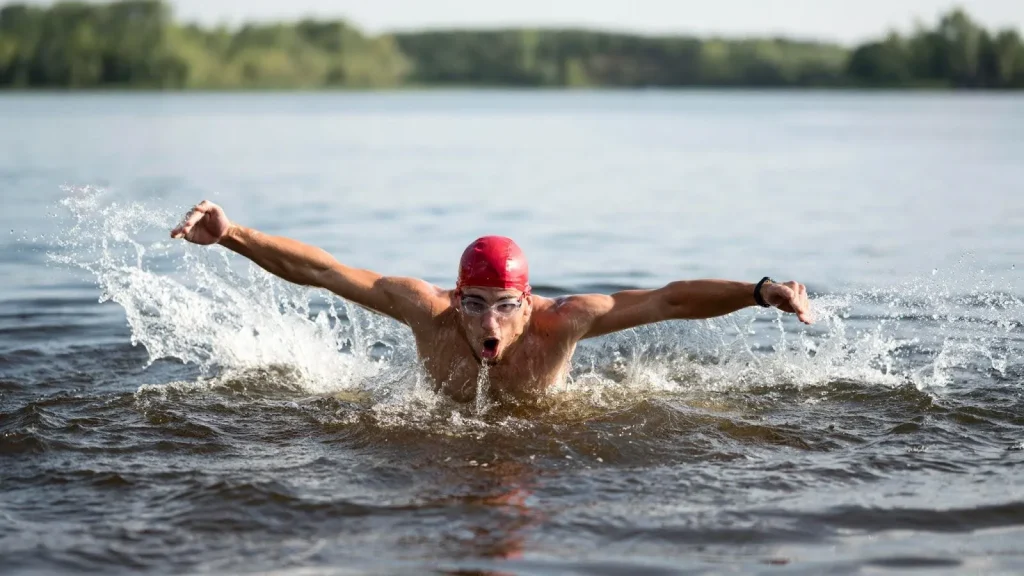
Starts and turns often mark the difference between good swimmers and great swimmers. Even if you swim well in the middle of the pool, slow starts or turns can lose you time. According to SwimSwam, turns are especially important in breaststroke.
Here’s how to improve:
- Start: Focus on being in a streamlined position off the block, with a strong push and a powerful underwater pull-out.
- Underwater pull-out: After you dive or push off the wall, streamline and use a strong kick and pull to maintain speed before surfacing.
- Turn: As you approach the wall, time your touch and push-off in one smooth motion. Keep your body flat, feet planted quickly, and push into a streamline.
- Breakout: After pushing off the wall, ensure you stay streamlined and start your stroke once you are at speed, not too early.
Better starts and turns help you make up ground and keep momentum.
Step 6: Build Strength And Endurance
Improving your breaststroke is not only about technique; you also need to be physically fit. You’ll benefit from leg, core and hip strength because breaststroke uses these areas heavily. Since breaststroke may feel slower than some other styles (contrasting the fastest swimming stroke front crawl), you’ll want to have endurance to maintain form over distance.
Training suggestions:
- Kick sets: Use a board or hold on the wall to focus on very strong kicks for short distances.
- Sculling: Practice hand/forearm movements in the water to improve your feel for the catch and pull.
- Glide drills: After your kick and pull recover in a perfect streamline to practise the “rest” portion of the stroke.
- Lap swimming: Incorporate longer sets of breaststroke or mixed strokes to build endurance and keep form consistent.
- Strength training: Off-pool work on squats, lunges, hip mobility and core stability supports your stroke.
By combining technique drills with building fitness, you create a stroke that lasts longer and feels more natural.
Step 7: Use Drills To Refine Your Technique
Drills are one of the most useful ways to hone your breaststroke. They allow you to isolate specific parts of your stroke and fix issues one by one. SwimSwam lists some great drills like the windshield wiper drill for the pull.
Here are some effective drills:
- Pull-kick-glide drill: Pull arms, kick legs, then glide. Work on each phase.
- Narrow kick drill: Use a pull buoy to restrict leg movement and force a narrow kick.
- Scull drill: Positioned vertical or horizontal, use hands to practise the sweep and catch motion.
- 21s drill: For example: 7 strokes pull only, 7 strokes kick only, 7 strokes full stroke.
- Tempo drill: Count strokes per length and aim to reduce that number over time.
Drills make practice purposeful and help you improve without feeling like you are just swimming laps.
Step 8: Focus On Breathing And Glide
Your breathing and glide matter a lot. In breaststroke, unlike some other strokes, you often look forward and inhale then press down into the water as you exhale. But you must do this without lifting your head too high. Swimming.org says you should keep your shoulders and neck relaxed to avoid strain.
Key breathing and glide tips:
- Head motion: Raise shoulders to breathe, not your head out of the water.
- Exhale underwater: Start exhaling as your face returns into the water so you are ready to inhale when you pop the head up next.
- Glide: After your kick, hold a streamlined position for a short count. This gives you recovery and momentum.
- Keep knees and feet ready: As you glide, your feet should begin to come up and hips begin to settle into the next kick.
By working on this, your stroke becomes smoother and less tiring. You’re not rushing everything and you’re using your glide wisely.
Step 9: Monitor Your Progress And Keep It Fun
Improving your breaststroke is a journey. You should measure progress and keep it fun so you stay motivated. Maybe you time your 50-metre breaststroke each week or count strokes per lap and aim to reduce them over time. Reddit swimmers say reducing stroke count helps efficiency.
Ways to monitor progress:
- Time trial: Swim a fixed distance and see if your time improves.
- Stroke count: Count how many strokes you take per lap and aim to reduce.
- Video yourself: Ask a friend or coach to film your stroke and compare over weeks.
- Set small goals: For example, focus on a better kick or smoother glide for one week.
- Celebrate improvements: Every small gain is progress and should give you energy to keep going.
Keeping it fun ensures you’ll stick with it and make real gains in your stroke.
Step 10: When To Get Help And What To Expect
Sometimes you’ll hit a plateau and need extra help. A swimming coach can help you spot issues like kick width, timing or body position. According to swim-tech articles, narrowing kick width and improving timing are common areas that need expert insight.
Signs you might need support:
- You feel like you are working hard but not getting faster.
- You fatigue quickly or your hips drop in the water.
- You cannot hold good form beyond 25 or 50 metres.
- You have questions about starts or turns.
With help, you’ll get feedback, drills tailored for you and motivation. Over time your breaststroke will feel more natural, efficient and enjoyable.
Putting It All Together
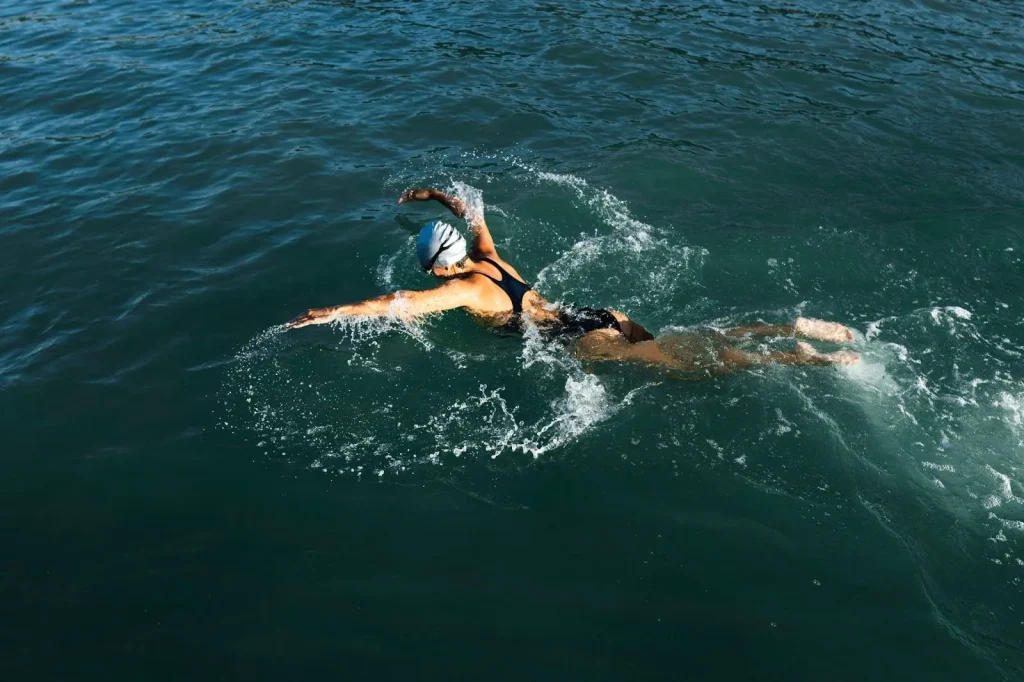
Improving your breaststroke is about combining technique, fitness and consistency. Think of it like building a house. First you need a strong foundation (body position) then the walls (kick and pull) then the roof (timing, starts and turns) then the finishing touches (drills, breathing, monitoring progress). As you practise each part one by one, you will notice your stroke becoming stronger and your speed improving.
Also remember there are many swimming strokes beyond breaststroke. Understanding each one helps you compare and appreciate what makes breaststroke special. Whether you use breaststroke for fitness, fun or competition, the principles of good technique apply.
It is also important to enjoy the process and give yourself time. You might be moving slowly at first, but with consistent practise, you will start to see improvement in your speed, comfort and confidence.
Conclusion On Breaststroke Swimming
Improving your breaststroke swimming step by step is within your reach. By focusing on body position, mastering the kick, refining your arms, and paying attention to timing, you lay the foundation for a strong stroke. Add good starts and turns, build your fitness and use drills to fine-tune your technique. With patience and practise, you will swim more smoothly and confidently in the pool.
If you want support or a friendly community, our team at Swimhub is here to help. We provide coaching, training plans and guidance for swimmers of all levels.
Contact us and let us help you take your breaststroke to the next level.
Frequently Asked Questions About Breastroke Swimming
What Is The Most Important Thing To Fix First In Breaststroke?
The most important part to fix first is your body position and the kick. With good posture and an efficient kick you build a strong base for the rest of the stroke.
How Do I Know If My Kick Is Too Wide In Breaststroke?
If you feel you are moving slowly despite strong legs, your kick may be too wide and creating drag. A key sign is your knees spreading wide and feet finishing far apart.
How Many Drill Sets Should I Do To Improve My Breaststroke?
There is no fixed number, but doing 2-3 focused drill sets per week works well. Each set should isolate one area: kick, pull or glide. Consistency matters more than volume.
Can Improving My Breaststroke Help Me Swim Longer Without Tiring?
Yes. By improving your technique, you reduce wasted energy and drag. This helps you swim longer and with less effort during training or swim sessions.
Will Practising Only Breaststroke Make Me Better At Other Strokes Too?
Working on your breaststroke will improve your overall body awareness, timing and coordination. These benefits can help your other strokes and your general swim fitness, but you still need to practise each stroke individually.
