

Swimming has four main competitive strokes, each with unique techniques and speed capabilities.
But when it comes to pure velocity in the water, which swimming stroke is the fastest?
The answer is clear: freestyle.
However, there’s more to it than just raw speed. Let’s dive into why freestyle dominates and how other strokes compare in terms of performance.
Why Is Freestyle The Fastest Stroke?
Freestyle’s unmatched speed comes down to a combination of technique, body position, and propulsion. It is designed to minimise resistance while maximising forward movement, allowing swimmers to maintain high speeds for longer durations.
The stroke’s mechanics also allow for easy breathing adjustments, so swimmers can maintain their rhythm without compromising their speed. These factors make freestyle the best choice for competitive swimming and speed-based events.
Efficient Body Position
A streamlined body position is key to moving fast in the water, and freestyle allows swimmers to achieve just that. The body remains horizontal and flat, reducing drag and making it easier to glide through the water with minimal resistance.
Keeping the body stretched out and maintaining a slight downward head tilt helps swimmers stay balanced and move efficiently.
Continuous Propulsion
Unlike strokes where both arms move together, freestyle uses an alternating arm motion, meaning there is never a moment when propulsion stops. As one arm reaches forward, the other pulls back through the water, ensuring that forward movement is always happening. This smooth transition between strokes allows for uninterrupted acceleration, making freestyle the fastest stroke in swimming.
Powerful Kick
The flutter kick is another reason why freestyle dominates in terms of speed. It consists of quick, alternating leg movements that provide extra propulsion without adding too much resistance. A well-executed flutter kick helps keep the body level, preventing the legs from sinking and causing drag.
While some swimmers rely more on arm strength for speed, a strong and steady kick can make a huge difference in overall performance.
Minimal Drag
Reducing resistance is one of the biggest factors in swimming fast, and freestyle is designed to do just that. Because the stroke involves a long, stretched-out body position, there are fewer areas of the body that create drag against the water.
Swimmers also rotate slightly with each stroke, which reduces their overall frontal surface area and makes movement smoother. The less resistance a swimmer experiences, the easier it is to maintain speed without excessive effort.
How Do Other Strokes Compare?

While freestyle is the fastest stroke in swimming, the others serve specific purposes in races and training.
Butterfly – The Most Physically Demanding Stroke
Butterfly is often mistaken for the fastest swimming stroke due to its powerful movements. It generates significant propulsion, but the energy cost is much higher.
Technique: Butterfly relies on a simultaneous arm motion, where both arms sweep forward together in a windmill-like movement. This is combined with a powerful dolphin kick, where the legs move in a fluid, wave-like motion to generate propulsion.
Speed Factor: Butterfly generates strong forward movement, but the bursts of power are followed by moments where momentum slows slightly. Because it demands full-body strength and coordination, even top athletes struggle to maintain maximum speed for long distances.
Records: The men’s 100m butterfly record is 49.45 seconds (Caeleb Dressel, 2021), close to freestyle but still slower.
Backstroke – The Fastest Stroke On Your Back
Backstroke is the only competitive stroke performed face-up. It shares similarities with freestyle but has more resistance due to body position.
Technique: The arms move in an alternating motion, much like freestyle, but instead of pulling forward, they rotate backwards through the water. The flutter kick keeps the legs moving continuously, helping to maintain speed and prevent sinking.
Speed Factor: Backstroke is naturally slower than freestyle because the chest and head remain exposed to the air, increasing resistance. Water pushing against the front of the body slows forward motion, making it harder to maintain high speeds.
Records: The men’s 100m backstroke record is 51.60 seconds (Thomas Ceccon, 2022).
Breaststroke – The Slowest Competitive Stroke
Breaststroke focuses on technique and efficiency rather than speed. Swimmers use a frog-like kick and a short, powerful glide.
Technique: Swimmers start each stroke with an outward sweep of the arms, followed by a powerful push back to propel forward. The legs perform a frog-like kick, which generates force while keeping the body balanced in the water.
Speed Factor: Breaststroke has the highest resistance of any stroke, as the body moves through the water with more surface area exposed. Since both the kick and arm movement happen simultaneously, there are moments where propulsion stops completely before the next stroke begins.
Records: The men’s 100m breaststroke record is 56.88 seconds (Adam Peaty, 2021).
Can You Improve Your Freestyle Speed?
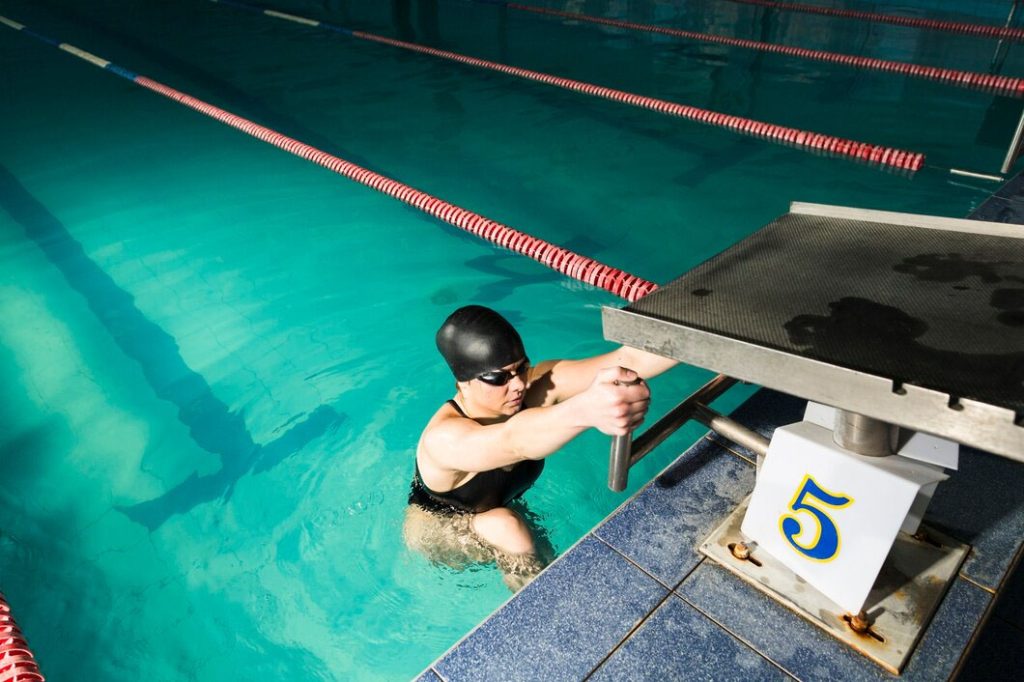
Even if you’re not aiming for competitive swimming, refining your freestyle technique can make a noticeable difference in speed and efficiency.
Small adjustments in body position, stroke mechanics, and breathing can help you glide through the water with less resistance and more power.
Body Position: Keeping your body flat and aligned helps reduce drag, allowing you to move smoothly through the water. A slight downward tilt of the head and engaged core muscles will help maintain balance and stability.
Arm Stroke: A high elbow catch, where the forearm and hand enter the water before pulling back, maximises propulsion with each stroke. A strong, controlled pull generates forward momentum, helping you move efficiently without wasting energy.
Kick Technique: A steady and relaxed flutter kick provides additional propulsion without draining too much energy. Kicks should be small and controlled, coming from the hips rather than the knees, to maintain a smooth and balanced stroke.
Breathing Strategy: Minimising head movement while breathing helps keep the body aligned and prevents unnecessary resistance. Turning the head just enough to take a breath while maintaining a steady rhythm allows for continuous forward motion without disrupting speed.
Conclusion On What Is The Fastest Swimming Stroke
Freestyle stands as the fastest swimming stroke, thanks to its continuous propulsion, streamlined body position, and efficient breathing technique.
While butterfly generates immense power, and backstroke and breaststroke have their unique advantages, freestyle remains unmatched in speed and efficiency across all distances.
At Swimhub, we offer expert-led swimming lessons in Singapore designed to help swimmers of all levels refine their technique and improve their speed in the water. Whether you’re looking to master freestyle, enhance your endurance, or develop water confidence, our structured programmes cater to both children’s swimming lessons and adult swimming lessons.
Take your swimming skills to the next level with Swimhub, where proper technique meets expert guidance. Sign up today and experience the difference!
Frequently Asked Questions About What Is The Fastest Swimming Stroke
What Makes Freestyle Faster Than Other Strokes?
Freestyle is the fastest stroke because it maintains continuous propulsion with alternating arm movements and a flutter kick, while minimising drag through a streamlined body position.
Should Beginners Start With Freestyle Or Another Stroke?
Freestyle is often the first stroke taught because it is the most efficient for covering distances, but beginners may find breaststroke easier to learn due to its slower pace and more controlled movements.
Are There Techniques To Make Freestyle Even Faster?
Yes. Reducing resistance, improving stroke efficiency, increasing kick strength, and refining breathing techniques can all contribute to higher speeds in freestyle.
How Does Breathing Affect Freestyle Speed?
Turning the head too much or too frequently can disrupt body alignment and slow the stroke, so competitive swimmers practise controlled breathing to maintain momentum.
Is There A Stroke Faster Than Freestyle In Any Situation?
While freestyle is the fastest over standard distances, underwater dolphin kicks after starts and turns can momentarily be faster, which is why swimmers maximise their underwater phase in races.
Should Swimmers Train With Other Strokes To Improve Freestyle?
Yes. Training with strokes like butterfly and backstroke helps build strength, flexibility, and endurance, which can enhance overall freestyle performance.
