Swimming is one of the most effective and enjoyable ways to stay fit, improve mental health, and build confidence in the water. Whether you are learning the basics or training for competitions, having the right gear is essential. The correct equipment helps you swim safely, comfortably, and efficiently. It also allows you to focus on improving your technique without unnecessary distractions.
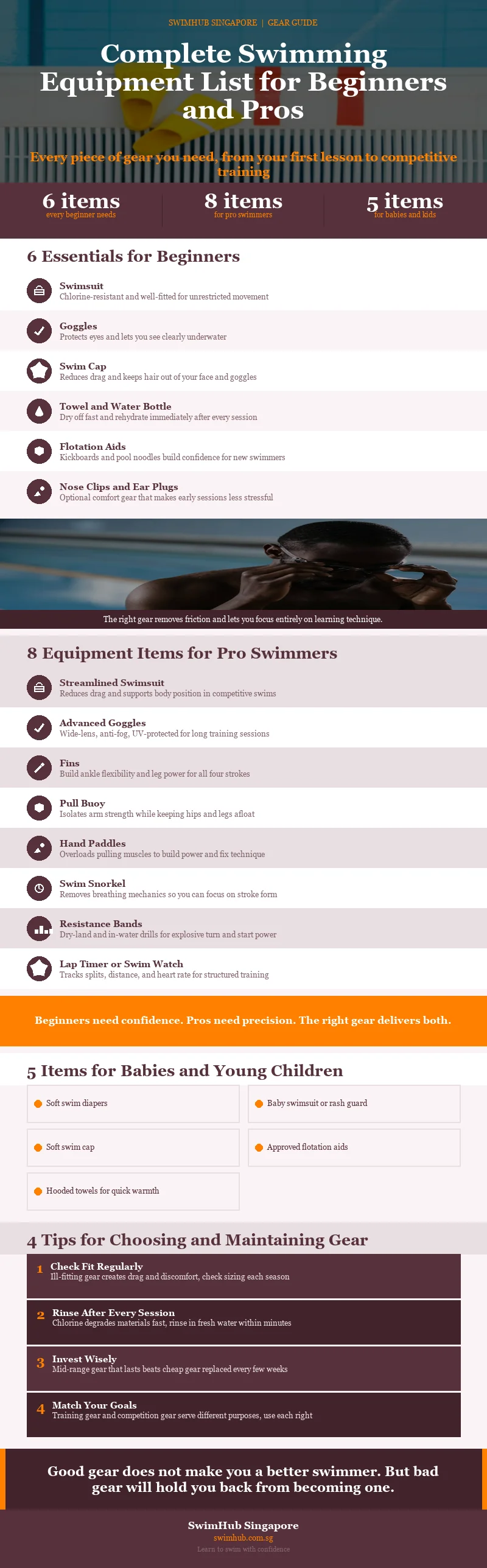
This guide provides a complete swimming equipment list for beginners and pros. It covers everything from the essentials to specialised tools, plus tips for babies and young children, fun accessories, and gear that improves performance.
Swimming Equipment List For Beginners
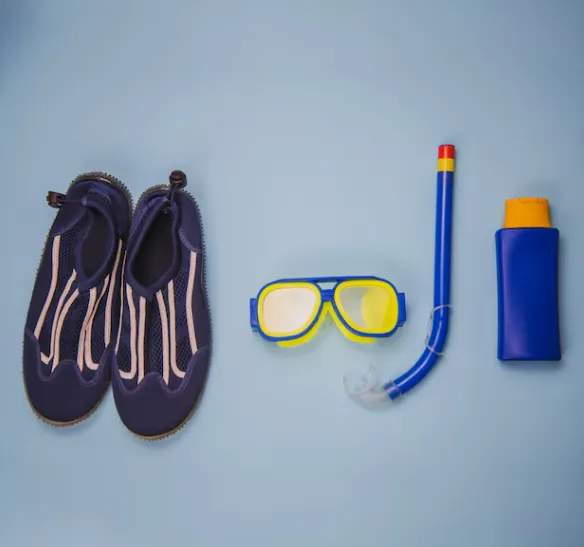
For those just starting out, the focus is on comfort, safety, and building confidence in the water. Beginners don’t need specialised gear right away, but having the basics ensures a positive experience.
- Swimsuit – Choose a comfortable suit that allows free movement. Beginners should prioritise comfort over style or performance features.
- Goggles – Clear lenses are best for beginners so they can see underwater without strain. Make sure they fit snugly to prevent leaks.
- Swim Cap – Keeps hair out of the face and reduces drag. Soft silicone or stretchable caps are gentler for those new to swimming.
- Towel and Water Bottle – A simple microfibre towel and a water bottle help keep you warm and hydrated.
- Flotation Aids – Kickboards, small pool floats, or foam noodles can help build confidence and allow beginners to focus on basic movements.
- Nose Clips and Ear Plugs – Optional but helpful for reducing discomfort and water entering sensitive areas.
Beginners should focus on learning basic strokes, building comfort in the water, and avoiding common mistakes like lifting the head too high while breathing or kicking too hard. Using the right gear helps create a positive foundation for future training.
Swimming Equipment List For Pros
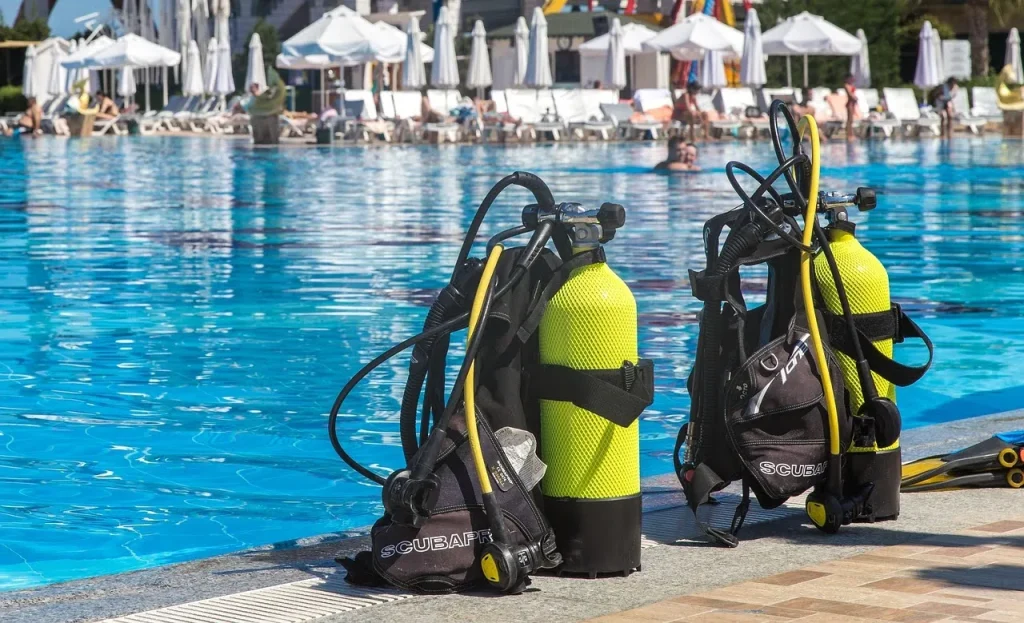
For experienced swimmers, the focus shifts to performance, technique refinement, and endurance. Pro swimmers benefit from specialised gear that targets different muscles and improves efficiency.
- Streamlined Swimsuits – Suits designed to reduce drag for freestyle swimming or lap training. They help maintain speed and efficiency in the water.
- Advanced Goggles – Tinted lenses or anti-fog coatings for indoor and outdoor conditions. Precision fit ensures comfort during long training sessions.
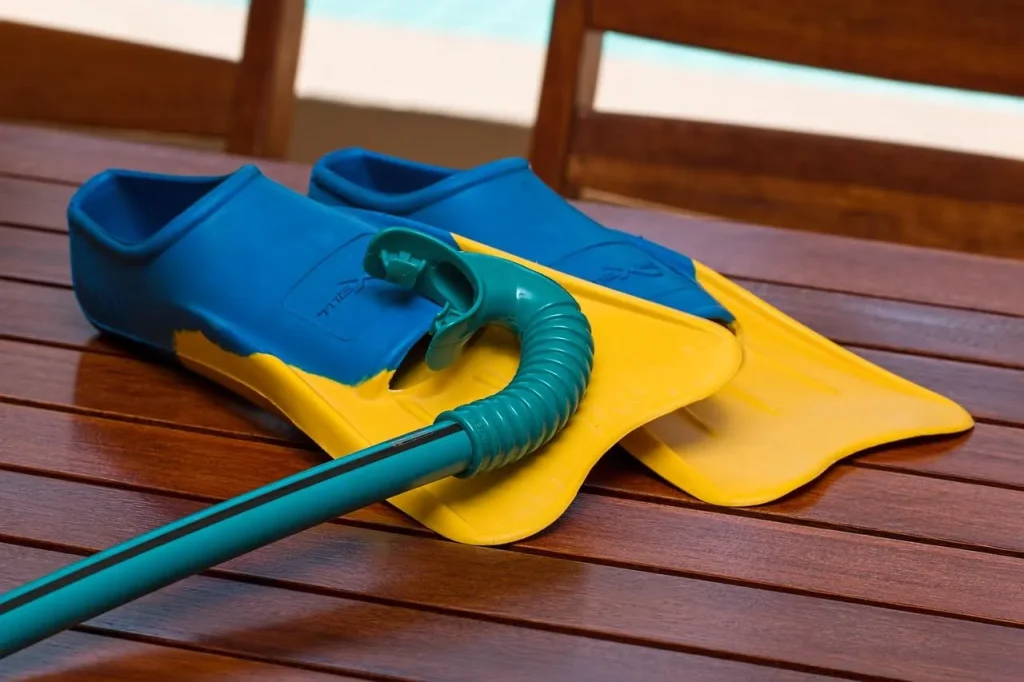
- Fins – Used for technique drills and endurance sets. Fins help strengthen legs and teach proper ankle flexibility.
- Pull Buoy – Focuses on upper body strength and stroke mechanics. Helps maintain proper body alignment while swimming.
- Hand Paddles – Increase resistance for arm strength and improve stroke technique. Often used in combination with pull buoys.
- Swim Snorkel – Allows focus on arm technique or bilateral breathing without turning the head. Useful for technical drills and endurance training.
- Resistance Bands – For dryland exercises that improve flexibility and strength before entering the pool.
- Lap Timers or Swim Watches – Track progress, monitor intervals, and measure performance improvements.
Pro swimmers often combine these tools in structured workouts like lap swimming, interval training, or recovery swims. Each piece of gear is chosen for a purpose, helping improve efficiency, reduce fatigue, and prevent common swimming mistakes.
Equipment To Improve Technique And Strength
Once you have the basics, adding tools to your swimming routine can make a big difference. These items help you improve technique, build strength, and increase endurance.
Kickboard
Kickboards are one of the most useful pieces of swimming equipment. They allow you to focus entirely on your leg movements. Beginners can start with small, controlled kicks, building strength and coordination. More experienced swimmers can increase the intensity, practising fast kicks or longer distances. Kickboards are particularly useful in freestyle swimming, breaststroke swimming, or for working on a specific stroke without worrying about arm movements.
Pull Buoy
A pull buoy is a float placed between your thighs. It lifts your legs and allows you to focus on arm technique. Pull buoys help strengthen the upper body while encouraging proper stroke mechanics. They are especially helpful for freestyle and backstroke training. Using a pull buoy teaches body alignment and encourages efficient movement through the water.
Fins
Fins improve propulsion and teach proper leg movement. They make swimming faster and more efficient, allowing swimmers to focus on arm coordination. Beginners should use fins sparingly to avoid over-reliance, while advanced swimmers can incorporate them into warm-ups, endurance sets, or technique drills. Fins also help improve ankle flexibility, which is crucial for effective kicking.
Hand Paddles
Hand paddles attach to your hands to increase resistance. They help build arm strength, improve stroke mechanics, and enhance water feel. Beginners should use paddles lightly to avoid shoulder strain, while pros can use them for targeted technique work. Combined with a pull buoy, paddles help reinforce correct arm positioning during freestyle and butterfly strokes.
Swim Snorkel
A swim snorkel allows you to focus on technique without worrying about turning your head to breathe. It encourages steady breathing and correct head positioning. Beginners can practice bilateral breathing more comfortably, and advanced swimmers can use snorkels to isolate arm movements or refine stroke timing.
Specialised Equipment For Babies And Young Children
Baby and toddler swimming lessons require specific gear focused on safety, comfort, and confidence-building. Here’s what to bring for baby swimming lessons:
- Soft Swim Diapers – Essential to maintain hygiene in the pool.
- Baby Swimsuit or Rash Guard – Keeps the baby warm and protects skin from chlorine or sun.
- Soft Swim Cap – Gentle on the head and keeps hair away from the face.
- Flotation Aids – Some classes provide floats or small rings. These help babies feel secure and confident in the water.
- Small Towels or Hooded Towels – Keep babies warm and comfortable after lessons.
Early swimming experiences help build water confidence, improve coordination, and introduce fundamental skills. The right equipment ensures lessons are safe, fun, and productive.
Accessories For Comfort, Safety, And Fun
Beyond the essentials and technical tools, certain accessories make swimming more enjoyable and versatile.
- Nose Clips and Ear Plugs – Help prevent water from entering the nose or ears. Nose clips are useful for beginners learning breath control, while ear plugs reduce the risk of infections.
- Water Shoes or Swim Socks – Protect feet from rough surfaces, slippery areas, or outdoor pools. They can also provide warmth in colder water.
- Pool Toys and Games – Floating rings, dive sticks, and pool balls are great for building coordination and endurance in a playful way. They are especially useful for children, beginners, or group sessions.
- Resistance Bands or Stretch Cords – For dryland training or warm-up exercises before entering the pool. They improve flexibility and prepare muscles for swimming.
These accessories help swimmers of all levels feel safe and confident, while also adding variety and enjoyment to sessions.
How Swimming Equipment Builds Confidence And Supports Mental Health
Using the right swimming gear does more than improve performance. It also helps you feel confident in the water and supports your mental health.
- Reduces Fear and Anxiety – Flotation devices, well-fitting goggles, and swim caps help beginners feel safe and comfortable in the water.
- Encourages Focus on Technique – When gear is reliable, you can focus on improving strokes instead of worrying about discomfort or water entering your eyes or nose.
- Promotes Consistent Practice – Comfortable and effective equipment makes it easier to stick to regular swimming sessions, which is important for building confidence and skill.
- Supports Mental Calmness – Swimming rhythmically with the right gear can be meditative, reducing stress and improving mood.
- Boosts Self-Esteem – Mastering techniques with the help of fins, paddles, or kickboards helps swimmers of all levels feel accomplished and motivated.
Having the right equipment allows you to enjoy swimming safely, improve skills, and experience the mental health benefits of consistent practice.
Tips For Choosing And Maintaining Gear
A swimming equipment list is only effective if items fit well, are maintained properly, and match your goals.
- Check Fit Regularly – Goggles, swimming caps, and suits should be comfortable and adjustable. Poorly fitting gear can cause discomfort or even injuries.
- Rinse After Every Session – Chlorine and salt can damage equipment over time. Rinsing ensures longevity.
- Invest Wisely – Buy quality gear that lasts longer and performs better. Start with essentials, then add specialised items gradually.
- Match Your Goals – Beginners should prioritise comfort and safety. Advanced swimmers need tools for endurance, technique, and recovery.
Proper care and choice of gear improve performance, prevent injuries, and make swimming a more enjoyable activity.
Conclusion On Complete Swimming Equipment List
A well-prepared swimmer has the right gear for every session. From basic items like swimsuits, goggles, and caps to specialised tools like fins, pull buoys, and hand paddles, each item has a purpose. Beginners gain confidence and comfort, while pros refine technique, improve endurance, and enhance performance. Safety, efficiency, and enjoyment all improve with a carefully chosen swimming equipment list.
Frequently Asked Questions About Swimming Equipment List
What Is Included In A Swimming Equipment List?
A complete list includes swimsuits, goggles, swim caps, towels, water bottles, and optionally fins, kickboards, pull buoys, paddles, and snorkels.
Do Beginners Need Specialised Gear?
Not necessarily. Beginners can start with basic essentials. Additional gear like fins or paddles can be added later to improve technique.
What Gear Is Needed For Baby Swimming Lessons?
Soft swim diapers, baby swimsuits, caps, flotation aids, and small towels are essential for safety and comfort.
How Can Swimming Equipment Improve Technique?
Kickboards, pull buoys, paddles, and fins target specific muscles, refine strokes, and improve endurance.
Can Swimming Accessories Make Sessions More Fun?
Yes. Toys, games, and flotation aids encourage practice, build confidence, and improve coordination while keeping sessions enjoyable.
