
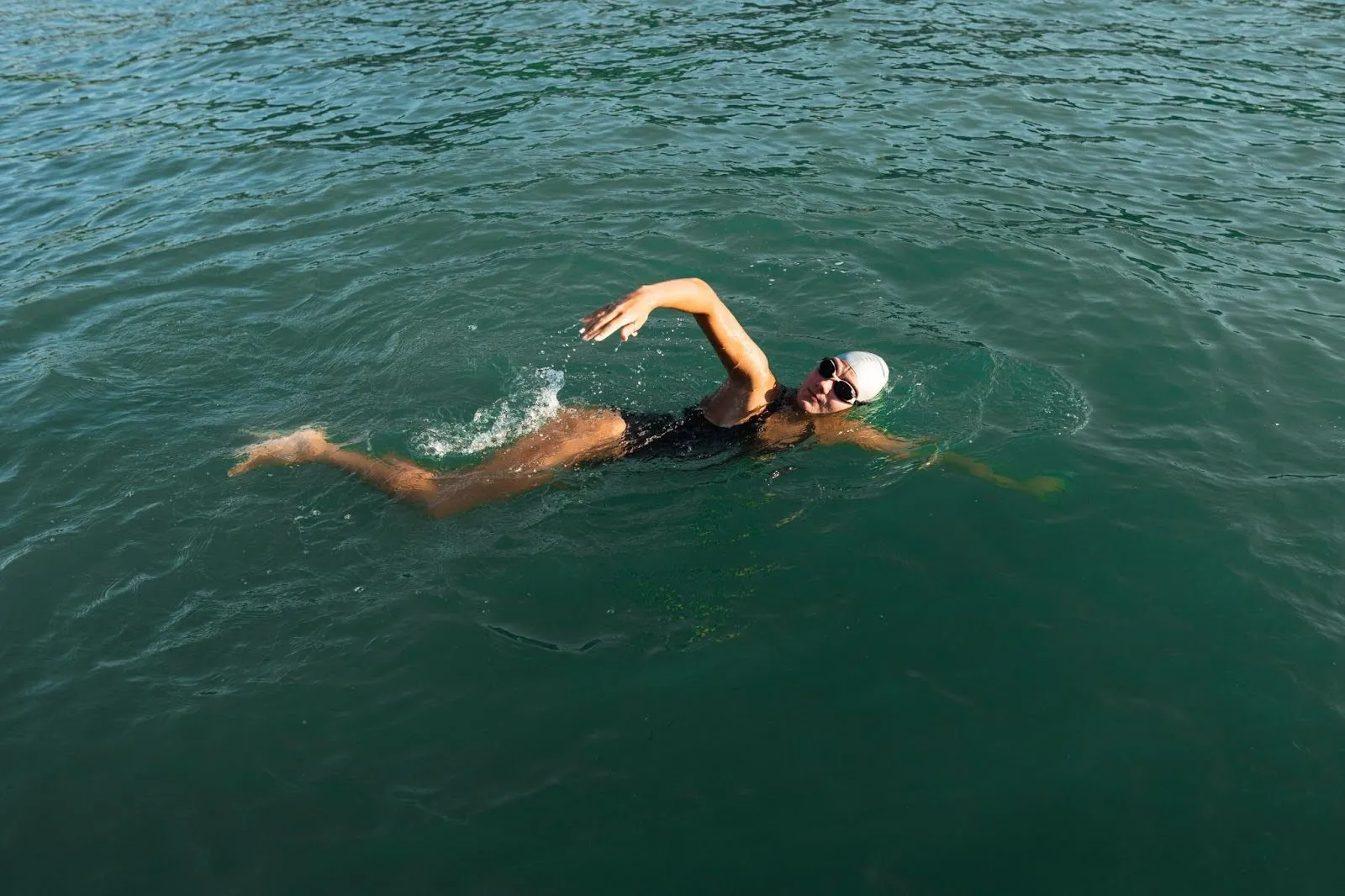
Swimming is one of those activities that almost everyone recognises as good for the body. People talk about it like it strengthens muscles, calms the mind, and keeps you fit. But many ask the question: is swimming an aerobic exercise? And if it is, how exactly does it help your health?
In this guide, we’ll discuss whether swimming is an aerobics exercise and how it helps your health.
Let’s get started!
What Makes An Exercise Aerobic?
Before answering if swimming is aerobic, it helps to understand what aerobic exercise means. Aerobic exercise involves activities that raise your heart rate and keep it elevated over time. It uses oxygen to fuel your muscles, helping your heart and lungs work efficiently.
Common examples include running, cycling, walking, and yes, swimming. The key is steady, rhythmic movement. You do not sprint for a few seconds and stop. Instead, your body moves continuously, using large muscle groups for an extended period.
Why Swimming Is Aerobic
Swimming engages most of your muscles at once. Your arms, legs, core, and back all work together. The continuous movement increases your heart rate while you breathe rhythmically.
When you swim laps, your body relies on oxygen to maintain energy. This makes it aerobic. Even if you take short breaks, the overall session still keeps your heart and lungs active for longer periods.
You can also adjust the intensity. A slow swim is still aerobic, just lighter. A faster pace raises your heart rate more. The water provides resistance, so your muscles work harder without the impact stress of running or jumping.
How Swimming Improves Your Cardiovascular Health
Swimming is excellent for your heart and lungs. Here’s how it helps:
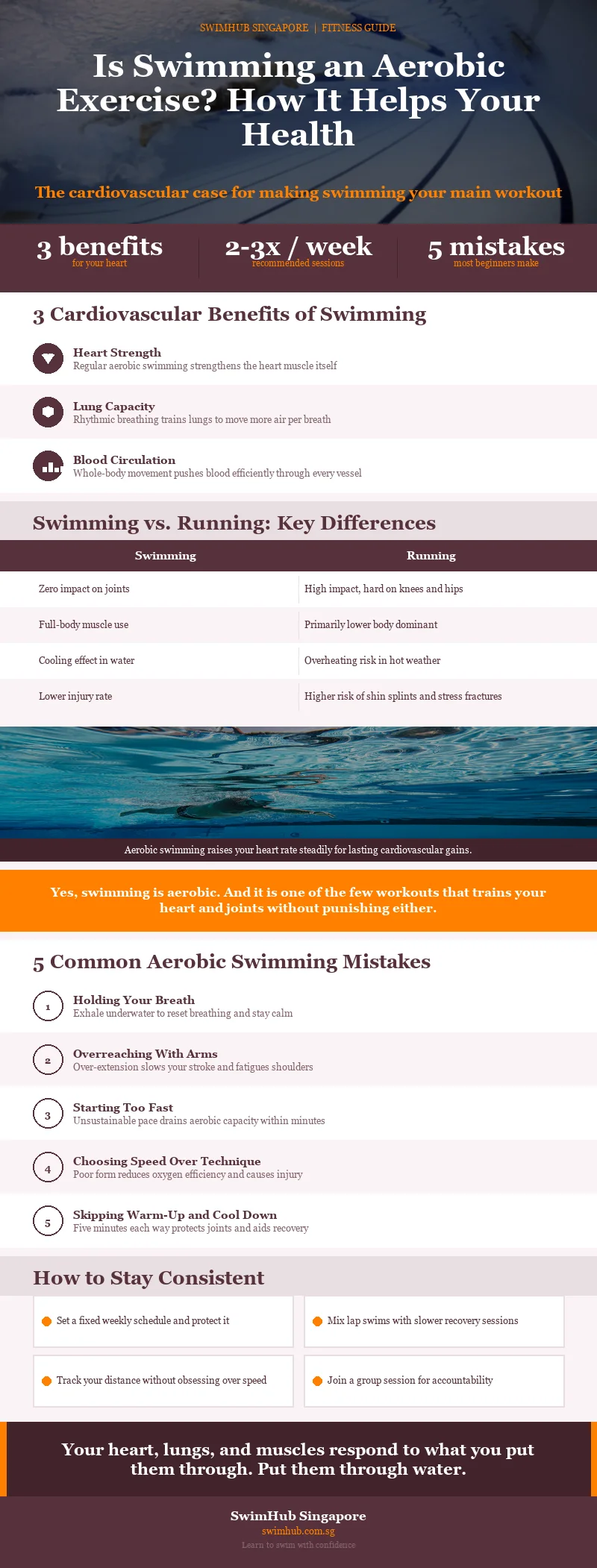
- Heart Strength: Regular swimming strengthens the heart muscle. It pumps blood more efficiently and reduces strain on your body.
- Lung Capacity: The rhythm of breathing while swimming increases your lung efficiency. Techniques like controlled inhalation and exhalation make your lungs stronger over time.
- Blood Circulation: Moving all your muscles boosts circulation. Blood flows better to every part of your body, helping organs stay healthy.
Comparing Swimming With Running
Many people ask about swimming vs running for fitness. Both are aerobic exercises, but they affect the body differently.
- Swimming is low impact. It protects your joints and reduces injury risk.
- Running is high impact. It builds bone strength and improves stamina but can stress knees and hips.
- Swimming works more muscle groups at once. It’s full-body exercise.
- Running focuses mostly on the legs.
Both improve heart health and endurance. Your choice depends on comfort, goals, and personal preference.
Different Types Of Swimming Workouts

Swimming does not need to be the same every time. Mixing your workouts keeps things interesting, challenges your body in different ways, and helps you avoid getting bored. Different workouts also target different areas, such as endurance, recovery, or speed. By adding variety, you keep your heart, lungs, and muscles engaged while making progress over time.
Lap Swimming
Lap swimming is the most straightforward and consistent form of aerobic swimming. You swim back and forth across the pool at a steady pace. This type of workout is great for building endurance because your body stays in motion for an extended period.
Lap swimming helps your heart and lungs work efficiently while keeping your muscles active. It teaches your body rhythm and pacing, which is essential for aerobic exercise. You can adjust the pace to match your fitness level.
Beginners can swim slowly to focus on technique, while more experienced swimmers can push a bit faster to challenge themselves. Lap swimming also gives a clear measure of distance and time, which can be motivating and help track improvements.
Recovery Swim Workouts
Recovery swims are slow and gentle sessions meant to help your body recover from intense training or a long day. These workouts are not about speed or distance. The focus is on keeping your muscles moving and blood flowing while reducing fatigue.
Recovery swims can prevent stiffness and soreness, and they give your joints a break from high-impact activities like running. They are also mentally refreshing. Moving through the water at a relaxed pace allows you to focus on breathing and technique without pressure. These swims can be done after a heavy workout day or when your body needs gentle movement to stay active.
Interval Training
Interval training in swimming involves alternating between periods of faster and slower swimming. This type of workout challenges your body differently than steady swimming. By changing pace, you push your cardiovascular system, improve endurance, and build strength in your muscles.
For example, you might swim one lap at a strong pace and then swim the next lap slowly to recover. This pattern repeats for several sets. Interval training also helps improve your mental focus, because you learn to adjust effort and maintain control even when fatigued. Over time, interval training increases your aerobic capacity and makes steady swimming feel easier.
Importance Of Warm-Up Exercises
A proper warm-up is essential for preparing your body for swimming. Warming up gets your muscles and joints ready, increases blood flow, and reduces the risk of injury. Many people skip it, but even a short warm-up makes a noticeable difference in performance and comfort.
Simple warm-up exercises can take as little as five minutes. Arm circles loosen the shoulders, leg swings wake up the hips, and light stretches for your back and chest help you move freely in the water. Slow torso twists mobilise the core and prepare your body for rotation during strokes.
Doing these exercises helps your body adjust to the water more efficiently, allowing you to swim smoothly from the start.
Proper Breathing Techniques
Aerobic swimming depends on steady, effective breathing. Without proper breathing, you can tire quickly, making your session less efficient and enjoyable.
Some tips for better breathing include:
- Exhale Slowly Underwater – This helps keep your lungs clear and ready for the next inhale.
- Inhale Smoothly When Turning Your Head – Timing your breaths with your stroke keeps the rhythm steady.
- Keep a Steady Rhythm With Your Strokes – Avoid erratic breathing; a consistent pattern helps maintain energy.
- Try Bilateral Breathing – Breathing on both sides balances your stroke, improves comfort, and prevents strain on one side of your body.
Correct breathing ensures your session stays aerobic, making your heart, lungs, and muscles work efficiently without unnecessary fatigue.
Common Swimming Mistakes
Even experienced swimmers make mistakes that can reduce the benefits of aerobic swimming. Recognising these mistakes helps you improve technique, efficiency, and safety.
Some common mistakes include:
- Holding Your Breath Too Long – This can tire you quickly and reduce oxygen supply to your muscles.
- Overreaching With Your Arms or Legs – Poor technique can strain joints and reduce efficiency.
- Swimming Too Fast at the Start – Sprinting early burns energy quickly and makes it harder to maintain aerobic pacing.
- Neglecting Technique in Favour of Speed – Good form is more important than how fast you go.
- Skipping Warm-Up or Cool Down Exercises – This increases risk of injury and reduces recovery benefits.
By correcting these issues, you swim more efficiently, build endurance safely, and enjoy longer, more comfortable sessions.
Cool Down Exercises
After your swim, a proper cool down is just as important as warming up. Cool down exercises allow your heart rate to return to normal, relax your muscles, and prevent soreness.
Simple cool down exercises include:
- Slow, Easy Swimming Laps – Helps your body transition gradually from high-intensity work to rest.
- Gentle Stretches for Arms, Legs, and Back – Reduces tension and improves flexibility.
- Floating on Your Back for a Few Minutes – Gives muscles time to relax and helps you focus on breathing and recovery.
Cooling down supports long-term progress, prevents stiffness, and keeps your muscles prepared for the next workout.
Health Benefits Beyond The Heart
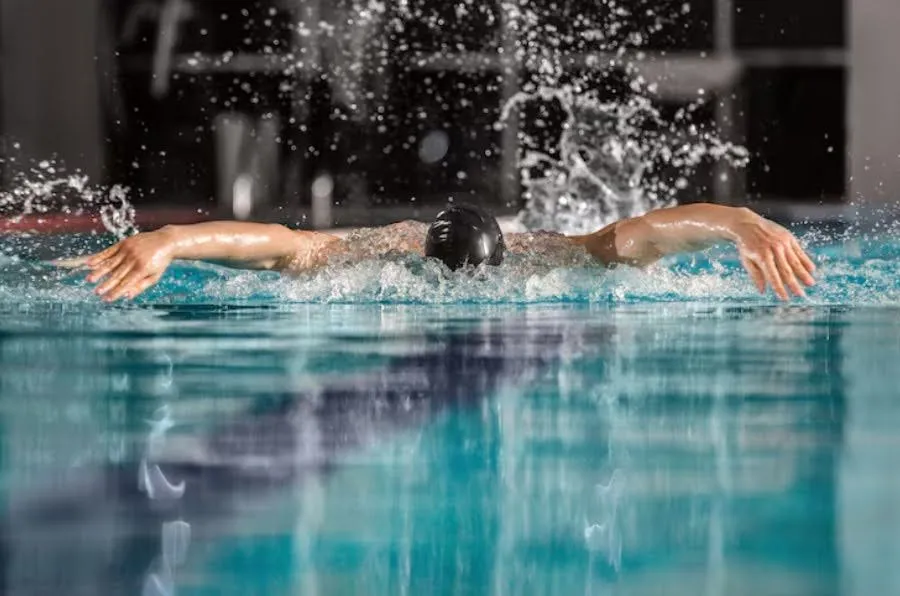
Swimming is not just about aerobic fitness. It provides a wide range of benefits that improve overall health.
Muscle Strength
Water resistance works your entire body. Arms, legs, back, and core all get a gentle but effective workout. Over time, swimming improves tone, strength, and endurance.
Flexibility
Swimming stretches your muscles naturally. The wide range of motion in strokes helps maintain flexibility, which supports better posture and movement outside the pool.
Mental Health
Aerobic swimming can calm your mind. The rhythmic strokes, controlled breathing, and gentle movement create a relaxing experience. Many swimmers report feeling less stressed and more focused after sessions.
Weight Management
Swimming burns calories effectively. Combined with a balanced diet, it supports healthy weight management. Aerobic sessions, steady or interval-based, can help maintain a healthy body composition.
Swimming integrates strength, flexibility, endurance, and mental well-being into one activity, making it a full-body workout with long-lasting health benefits.
How To Stay Consistent
Consistency is more important than intensity for aerobic benefits. Small, regular sessions give better results than occasional long swims.
Tips for consistency:
- Set a schedule and stick to it
- Mix lap swimming with recovery swims
- Track progress without pressure
- Join a swimming group for motivation
Who Can Benefit From Aerobic Swimming?
Almost everyone can benefit.
- Beginners: start slow, focus on technique and breathing.
- Adults: improve cardiovascular health and endurance.
- Older adults: low-impact exercise that protects joints.
- Athletes: add variety to training and improve recovery.
Even people recovering from injury can benefit if they follow a safe routine. Swimming is gentle and adaptable.
Conclusion On Is Swimming An Aerobic Exercise
So, is swimming an aerobic exercise? Yes. Swimming raises your heart rate steadily, engages most muscle groups, and improves lung capacity. It helps build endurance, strength, and overall fitness. The water makes it gentle on your joints while still providing an effective workout.
If you want support in choosing the right gear or planning sessions, you can check us out at Swimhub. We provide equipment and tips to help you enjoy swimming safely.
Visit our site or contact us to see how we can help you improve your health and confidence in the water.
Frequently Asked Questions About Is Swimming an Aerobic Exercise
How Often Should I Swim To Get Aerobic Benefits?
Most people feel improvements with two to three sessions a week. Consistency matters more than long or fast swims.
Can Swimming Replace Other Cardio Exercises?
Yes, swimming can replace running or cycling for aerobic fitness. It is gentle on joints and works the whole body.
Do I Need To Swim Fast To Get Aerobic Benefits?
No. A steady, rhythmic pace is enough. Your heart and lungs work better when you maintain a comfortable, continuous swim.
Is Lap Swimming The Best Way To Improve Endurance?
Lap swimming is simple and effective. It builds aerobic fitness gradually and allows you to control your pace easily.
Can Beginners Start With Aerobic Swimming?
Yes. Start slow, focus on technique and breathing. Gradually increase the time or distance as your comfort and endurance improve.
