
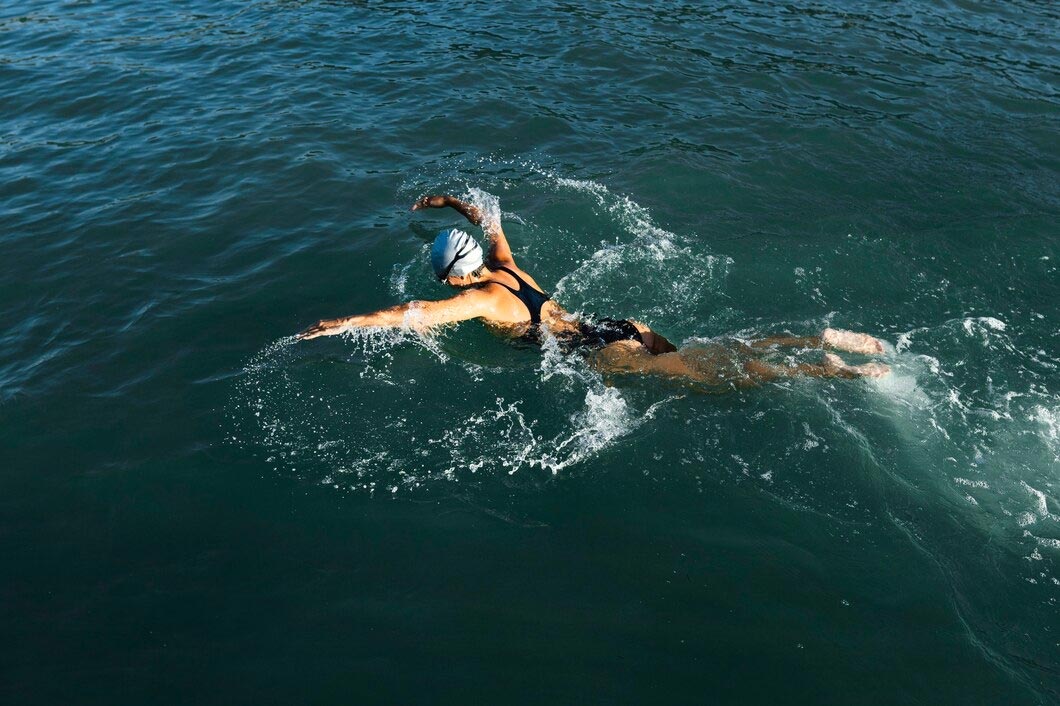
Freestyle, or front crawl, is often considered the most efficient and fastest swimming stroke. However, it requires synchronised movement of the arms, legs, and core and proper breathing technique. Many beginners need help with these elements, leading to inefficiency and fatigue.
Freestyle drills are designed to help swimmers focus on individual stroke components. By isolating and refining specific movements, you can transform your swimming into a smooth and effortless experience.
This guide introduces 14 beginner freestyle drills, explaining their purpose and step-by-step instructions to help you improve your technique, confidence, and endurance.
1. Catch-Up Drill
This drill is designed to improve the timing of your strokes, ensuring that one arm fully completes its motion before the other begins.
It helps swimmers focus on achieving full arm extension, which is crucial for maximising the power of each stroke. The drill also promotes better balance in the water, reducing the tendency to rush strokes and disrupt body alignment.
How to Perform:
- Swim freestyle, but only move one arm at a time.
- Keep your other arm extended in front until the active arm “catches up.”
- Alternate arms as you progress through the pool.
Key Tip: Maintain a steady kick to keep your body stable while practising.
Benefits: Builds proper stroke rhythm, reduces drag, and ensures each arm achieves a full range of motion.
2. Side-Kicking Drill
This drill is about mastering body alignment, which is key to reducing drag in the water. It teaches swimmers to maintain a streamlined position while focusing on their core strength and balance.
By practising side-kicking, you can also improve your ability to rotate your body efficiently during freestyle strokes, which is important for breathing and overall stroke mechanics.
How to Perform:
- Lie on your side with one arm extended forward and the other resting on your hip.
- Keep your head aligned with your spine and look sideways.
- Kick steadily from the hips, and switch sides every 25 metres.
Key Tip: Avoid bending your knees too much, keep your kicks small and controlled.
Benefits: Enhances core stability, improves streamlining, and prepares you for smoother body rotation during strokes.
3. Fingertip Drag Drill
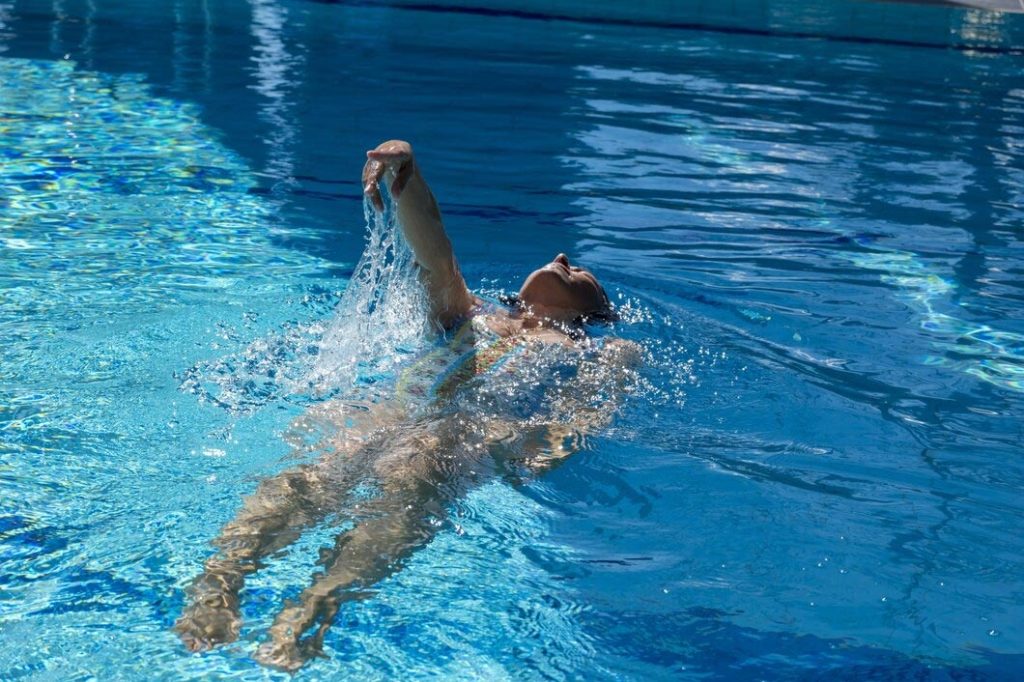
The fingertip drag drill focuses on developing a high elbow during arm recovery, which is important for an efficient and relaxed freestyle stroke.
A high elbow reduces shoulder strain and allows smoother transitions into the next stroke. Additionally, this drill builds awareness of arm positioning and encourages fluid motion above the water.
How to Perform:
- Swim freestyle, but lightly drag your fingertips along the surface as your arm exits the water.
- Focus on keeping your elbow high and leading with your forearm.
Key Tip: Keep the movement slow and deliberate to reinforce muscle memory.
Benefits: Promotes proper arm recovery, prevents injury, and improves stroke mechanics.
4. Breathing Rhythm Drill
Breathing is one of the most challenging aspects of freestyle, especially for beginners. This drill focuses on establishing a natural and relaxed breathing rhythm. It helps swimmers synchronise their breath with their strokes, reducing the tendency to hold their breath or panic when it’s time to inhale.
How to Perform:
- Swim freestyle and exhale steadily underwater.
- Turn your head to the side to inhale without lifting it too far from the water.
- Practise bilateral breathing by inhaling on alternate sides every three strokes.
Key Tip: Ensure you exhale completely before taking a new breath to avoid carbon dioxide build-up.
Benefits: Builds confidence, reduces fatigue, and promotes efficient breathing patterns.
5. Kickboard Drill
This drill isolates the legs, allowing swimmers to focus on building a strong and steady kick. Many beginners need to use their legs more effectively, leading to efficient propulsion. The kickboard drill teaches you to generate power from your hips while maintaining relaxed and flexible knees and ankles.
How to Perform:
- Hold a kickboard with both hands, arms extended in front of you.
- Perform small, rapid kicks from the hips.
- Keep your body aligned and avoid excessive movement.
Key Tip: To maintain balance, keep your head in a neutral position, looking forward or slightly down.
Benefits: Strengthens leg muscles, improves propulsion, and reinforces proper kicking technique.
6. Single-Arm Drill

The single-arm drill allows swimmers to focus on refining the movement of one arm at a time. By isolating each arm, you can work on developing a stronger and more controlled pull, improving the efficiency of your stroke. This drill enhances coordination as you practise breathing on the same side as the active arm.
How to Perform:
- Swim freestyle using only one arm, keeping the other extended in front.
- Breathe on the side of the active arm, rotating your body naturally.
- Alternate arms every 25 metres or length.
Key Tip: Keep a steady kick to maintain balance and forward motion.
Benefits: Improves arm strength, stroke symmetry, and breathing coordination.
7. Zipper Drill
The zipper drill focuses on refining the recovery phase of your stroke, which is crucial for reducing drag and maintaining a relaxed motion.
This drill helps you achieve better body rotation and smoother transitions between strokes by guiding your recovering hand close to your body. It also trains your muscles to maintain a high elbow position during recovery, ensuring an efficient stroke.
How to Perform:
- Swim freestyle; during the recovery phase, let your thumb lightly graze the side of your body.
- Imagine “zipping up” the side of your body from your hip to your armpit.
- Keep your elbow high and your movements controlled.
Key Tip: Avoid rushing, this drill is about precision, not speed.
Benefits: Improves arm recovery, encourages proper body rotation, and enhances stroke fluidity.
8. 6-3-6 drill
The 6-3-6 drill combines side-kicking with full strokes, helping swimmers practise body rotation and stroke coordination.
It emphasises the importance of core engagement and balance when transitioning between different positions. This drill promotes better timing between your kicks and arm movements, leading to a more synchronised freestyle stroke.
How to Perform:
- Start by kicking on one side for six counts with one arm extended forward.
- Take three freestyle strokes to switch to the other side.
- Repeat this cycle throughout the length of the pool.
Key Tip: Maintain a steady, rhythmic kick to stabilise your body.
Benefits: Improves timing, rotation, and body alignment while teaching efficient transitions between movements.
9. Bubble Bubble Breathe Drill

Breathing is often one of the most intimidating aspects of freestyle for beginners. This drill breaks down the breathing process into a simple, rhythmic pattern, helping swimmers stay relaxed and focused.
By practising controlled exhalation and inhalation, this drill builds confidence and ensures proper oxygen exchange during swimming.
How to Perform:
- Exhale twice underwater in a “bubble, bubble” rhythm.
- Inhale on the third stroke by turning your head to the side.
- Repeat this pattern throughout your swim.
Key Tip: Keep your head low in the water while breathing to avoid disrupting your streamline.
Benefits: Creates a consistent breathing rhythm, reduces anxiety, and improves overall stroke coordination.
10. Sculling Drill
Sculling drills teach swimmers to “feel” the water and understand how to grip it effectively for propulsion. By focusing on the subtle movements of your hands and forearms, this drill enhances your ability to generate power during the catch phase of your stroke. It’s also an excellent exercise for improving water awareness.
How to Perform:
- Float face-down in the water with your arms extended in front of you.
- Move your hands in small, figure-eight patterns, keeping your elbows still.
- Focus on maintaining a steady rhythm and staying balanced.
Key Tip: Keep your hands relaxed and flexible for better water sensitivity.
Benefits: Develops a stronger catch phase, increases propulsion, and improves overall efficiency in the water.
11. Streamline Push-Offs
The streamlined push-off drill focuses on perfecting body alignment and minimising drag during the start of your swim.
A strong push-off from the wall reinforces proper posture and streamlining techniques, setting the stage for an efficient stroke. This drill also helps swimmers develop underwater kicking skills, critical for maintaining speed after a turn.
How to Perform:
- Push off the wall with your arms extended overhead, one hand on the other.
- Keep your body straight, your head tucked between your arms, and your legs close together.
- Before surfacing to start your stroke, perform a few dolphin or flutter kicks.
Key Tip: Tighten your core to maintain a streamlined position.
Benefits: Reduces drag, improves underwater efficiency, and reinforces good posture.
12. Glide Drill
Many beginners waste energy by rushing their strokes without taking advantage of the glide phase. This drill teaches swimmers to be patient and focus on maximising distance per stroke. By practising controlled gliding, you can improve your stroke efficiency and learn to swim more smoothly and effortlessly.
How to Perform:
- Swim freestyle, but pause briefly after each arm stroke to glide through the water.
- Maintain balance and streamline during the glide phase.
Key Tip: Ensure your body stays aligned and your legs kick gently to maintain momentum.
Benefits: Improves stroke efficiency, reduces unnecessary energy expenditure, and enhances balance.
13. Fist Drill

The fist drill forces swimmers to rely on their forearms for propulsion rather than just their hands. This strengthens the pulling motion and builds awareness of the role of the forearms during the stroke. The drill also improves your ability to create propulsion even when your hand surface is limited.
How to Perform:
- Swim freestyle with your hands clenched into fists.
- Focus on engaging your forearms during the pull phase.
- Alternate between fists and open hands every 25 metres to compare the difference.
Key Tip: Keep your strokes controlled and avoid rushing through the water.
Benefits: Builds forearm strength, enhances the pulling phase, and improves overall stroke power.
14. Tapping Drill
The tapping drill helps swimmers develop better timing and coordination between their strokes and body rotation. It also reinforces the habit of keeping movements smooth and synchronised, which is important for a streamlined and efficient freestyle.
How to Perform:
- Swim freestyle, and as your recovering arm moves forward, tap your head lightly with your hand before it enters the water.
- Focus on rotating your body naturally as you tap.
Key Tip: Avoid lifting your head or disrupting your body alignment during the tap.
Benefits: Improves stroke timing, encourages proper rotation, and enhances overall technique.
Why Freestyle Drills Are Important
Freestyle swimming involves complex mechanics that can be difficult to master all at once. Beginners often face challenges like poor body alignment, weak propulsion, or erratic breathing. Freestyle drills allow swimmers to:
- Break down the stroke into manageable components.
- In isolation, practise specific skills, such as kicking, arm recovery, or breathing.
- Correct bad habits before they become ingrained.
- Build confidence and improve endurance over time.
Drills are not just for beginners, they are also invaluable for advanced swimmers who want to refine their technique and achieve greater efficiency.
Conclusion About Freestyle Drills
Practising these freestyle drills for beginners will help you build a strong foundation in swimming. By isolating different aspects of the stroke, such as arm movement, breathing, and kicking, you can focus on refining your technique and gaining confidence in the water.
Over time, these drills will translate into a smoother, more efficient freestyle that allows you to swim quickly and enjoyably. Incorporate these drills into your regular swimming routine, and don’t be afraid to revisit them even as you become more advanced, they are valuable tools for swimmers of all levels.
Want to level up your swimming skills? Check out SwimHub! Whether you’re just starting or already a seasoned swimmer, we’ve got expert coaching, personalised swimming lessons in Singapore, and a community with your back.
Dive in with us and make swimming easier, faster, and more fun. Contact SwimHub today, and let’s get started! Happy swimming!
Frequently Asked Questions About Freestyle Drills
How Often Should I Practise Freestyle Drills?
Freestyle drills can be incorporated into every swim session. Ideally, dedicate 15–30 minutes of your workout to drills, depending on your skill level and training goals. Regular practice, at least 2–3 times a week, will help you build muscle memory and improve your technique over time.
Can I Use Swim Equipment Like Fins Or Paddles During Drills?
Yes, swim equipment such as fins and paddles can be very helpful during drills. Fins can enhance propulsion, allowing you to focus on technique without worrying about forward momentum.
At the same time, paddles can improve your awareness of arm movements and water pressure during the pull phase. However, refrain from over-reliance on these tools, as practising without them is important for developing natural strength and coordination.
What Is The Best Way To Warm Up Before Starting Freestyle Drills?
Proper warm-ups are crucial to prevent injuries and prepare your body for drills. Start with 5–10 minutes of easy swimming, followed by dynamic stretches or gentle arm swings to loosen your shoulders and improve flexibility. You can also include a few laps of basic freestyle to acclimate your body to the water.
How Do I Know If I’m Doing A Freestyle Drill Correctly?
Pay attention to how your body feels and moves in the water. Good drills should make your swimming feel smoother, more balanced, and more efficient over time.
If you are unsure, ask a coach for feedback or record your swimming to analyse your technique. Some pools also have underwater mirrors to help you observe your form in real-time.
Freestyle Drills Suitable For Non-Competitive Swimmers?
Absolutely! Freestyle drills benefit anyone looking to improve their swimming technique, whether training for a competition, building endurance, or simply enjoying swimming as a recreational activity. Drills help create a solid foundation that enhances overall comfort and efficiency in the water.
