

If you’ve ever had a conversation about swimming distances, you might have heard people using “lap” and “length” interchangeably. While it might not seem like a big deal, these terms can mean different things depending on who you ask.
So, what is the difference between a swimming lap and a length? Let’s break it down and clear up the confusion.
Understanding Pool Measurements
Before diving into the difference between a lap and a length, it helps to understand how swimming pools are measured. Pools come in various sizes, but the most common lengths include:
- 25 metres: Often referred to as a short-course pool
- 50 metres: Also known as an Olympic-sized pool or long-course pool
- Yard-based pools: Common in certain countries, measuring 25 yards (slightly shorter than 25 metres)
No matter the size of the pool, knowing how distances are counted will help you track your swimming progress accurately.
What Is A Swimming Length?
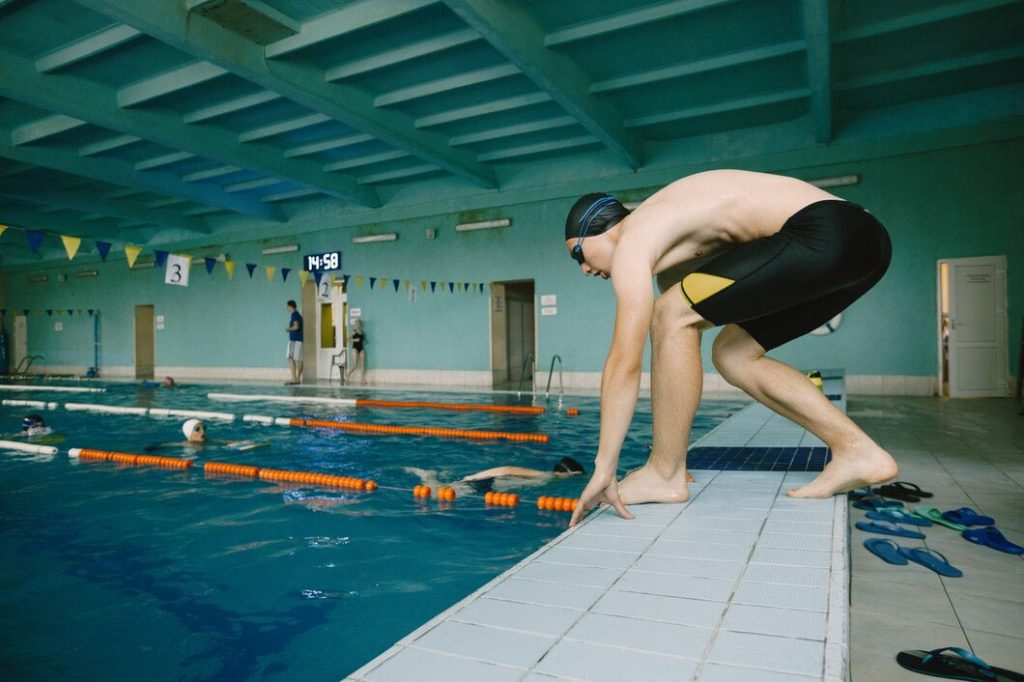
A length refers to swimming from one end of the pool to the other in a straight line. It’s a single stretch across the pool.
For example, if you start at one end of a 25-metre pool and swim to the opposite side, you have completed one length 25 metres of swimming.
What Is A Swimming Lap?
This is where the confusion begins. Some swimmers believe that a lap means the same as a length. Others insist that a lap requires swimming to one end and back to the starting point.
Lap as a Synonym for Length: Many casual swimmers and even some pools use “lap” and “length” to mean the same thing. If someone says, “I swam 10 laps,” they might simply mean they swam 10 lengths.
Lap as a Round Trip – Competitive swimmers and coaches often define a lap as a complete circuit, swimming to the other end and back. In this case, one lap equals two lengths.
Since there is no universally accepted definition, it’s always good to clarify what someone means when they talk about laps.
Why The Confusion?
The main reason for the mix-up is that in other sports, a lap usually means completing a full course and returning to the starting point.
Running tracks, cycling circuits, and racing events all use “lap” in this sense. But in swimming, pools have clear start and finish points rather than a circular route, leading to different interpretations.
Which Term Should You Use?
If you’re swimming for fitness and keeping track of your progress, it’s best to use lengths for accuracy. Since pools have fixed distances, counting lengths gives a clear measure of how far you’ve swum.
For example:
- Swimming 10 lengths in a 25-metre pool means you’ve covered 250 metres.
- If you define a lap as two lengths, 10 laps would be 500 metres.
To avoid confusion, always specify whether you mean lengths or laps when discussing distances with others.
How To Track Your Swimming Distance

Keeping count of how far you swim can be useful, whether you’re training for a competition or simply trying to improve fitness. Accurately tracking your distance helps you stay on target with personal goals, monitor progress, and structure workouts effectively.
1. Manual Counting
One of the simplest ways to track distance is by keeping count in your head, though it requires focus and memory.
Some swimmers break their session into smaller milestones, such as counting in sets of five or ten lengths, to make it more manageable. This method works well for short swims, but longer sessions can make it easy to lose track, especially when fatigue sets in.
If you prefer a no-tech approach, using a simple counting strategy, like associating each length with a number pattern or visual marker, can help.
2. Lap Counters
Many pools are equipped with digital lap counters that swimmers can tap at the end of each length, providing an easy way to track progress.
For those who swim independently, waterproof finger counters are available, allowing a quick press to log each lap without disrupting rhythm. These devices are particularly useful in busy pools, where distractions make it harder to keep track manually.
They offer a simple and reliable way to count without relying on memory, making them a popular choice for recreational and competitive swimmers alike.
3. Smartwatches And Swim Trackers
Smartwatches and swim-specific trackers have become a popular choice for those who want an automated way to measure distance.
Devices such as the Apple Watch, Garmin Swim, and Fitbit can detect strokes, count lengths, and even analyse swimming efficiency. Many of these gadgets sync with apps, allowing swimmers to review progress and set training targets.
While they provide accuracy and convenience, some models may struggle with detecting turns or changes in pace, so occasional manual checks can be helpful.
4. Using Pool Markers
Most pools have visual markers along the floor and walls that can help swimmers estimate distances without relying on counting alone. These may include T-shaped markings at the end of each lane, black lines on the pool floor, or numbered tiles along the edges.
Paying attention to these markers can act as a reference point, especially for those who prefer to focus on technique rather than constantly counting. While this method may not be as precise as using a lap counter or smartwatch, it provides a useful way to gauge progress with minimal effort.
The Importance Of Understanding Swimming Distances
Knowing how to measure swimming distances correctly is useful for:
Setting personal fitness goals: If you aim to swim 500 metres, knowing how many lengths you need helps you plan your session.
Competitive training: Swimmers preparing for competitions need accurate distance tracking to follow structured training plans.
Avoiding confusion in group swims: If you join a swimming class or club, everyone being on the same page about distances prevents misunderstandings.
Conclusion On What Is The Difference Between A Lap And Length
While “lap” and “length” are often used interchangeably, they refer to different ways of measuring swimming distance. A length is a one-way swim from one end of the pool to the other, while a lap typically means swimming there and back. Understanding this distinction can help swimmers track their workouts accurately, whether for fitness, training, or competition.
At Swimhub, we offer professional swimming lessons in Singapore designed to help both beginners and experienced swimmers refine their technique. Our structured training ensures that you develop strong swimming fundamentals while improving endurance and efficiency in the water.
Join our adult swimming lessons or female exclusive swimming programmes and gain confidence with expert guidance in a supportive learning environment.
Take the plunge with Swimhub and build a stronger, healthier swimming routine today!
Frequently Asked Questions About What Is The Difference Between A Lap And Length
What Is The Standard Definition Of A Lap In Competitive Swimming?
In competitive swimming, a lap is often defined as swimming to one end of the pool and back to the starting point, which equals two lengths. However, this definition can vary depending on regional or personal preferences.
Is A Lap The Same In Open Water Swimming?
In open water swimming, a lap refers to completing a full circuit of a designated course, which is usually a loop rather than a straight distance.
Should Swimmers Always Use Lengths Instead Of Laps For Distance Tracking?
Using lengths is often the most precise way to track swimming distance since it directly corresponds to the pool’s measured size. However, if a swimmer prefers referring to laps, it’s best to clarify what they mean to avoid miscalculations.
How Do Swim Meets Count Laps In Races?
Swim meets count race distances based on pool lengths rather than laps. For example, in a 400-metre freestyle event in a 50-metre pool, a swimmer completes eight lengths, not four laps.
Is It Wrong To Use Lap And Length Interchangeably?
It’s not necessarily wrong, but it can create confusion, especially in structured training or competitions. For clarity, it’s best to use “length” when referring to a one-way swim across the pool and specify if a lap means one or two lengths.
Should Beginners Focus On Laps Or Time Spent Swimming?
Beginners can benefit from tracking both, but focusing on time spent swimming helps build endurance without stressing over exact distances. Counting lengths can still be useful for gauging progress, but swimming for set time intervals encourages consistency.
