
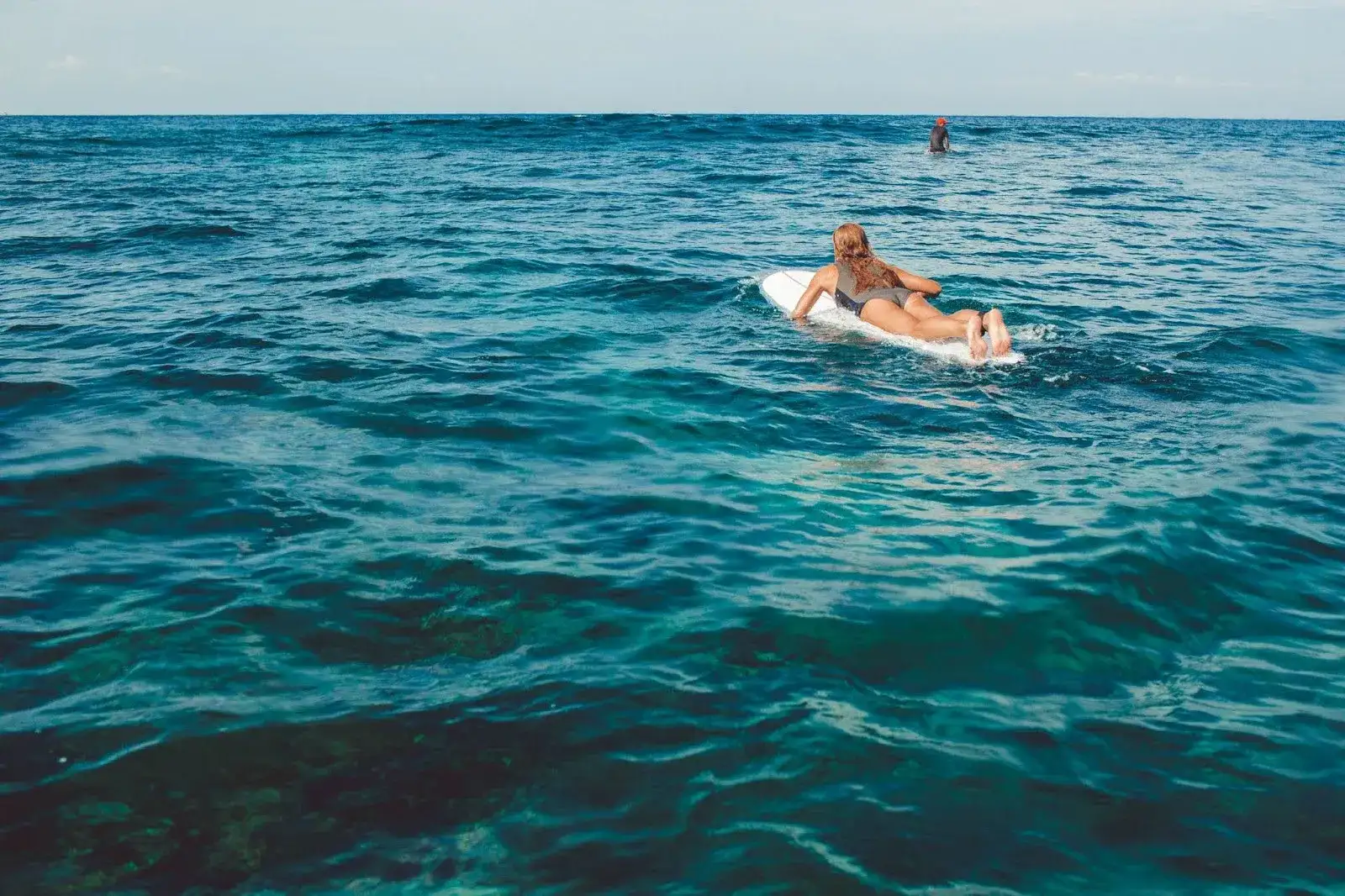
Ocean swimming feels very different from pool swimming. The water moves, the depth changes, and the surroundings are open. Some people love the freedom. Some feel nervous at first. Both feelings are normal. The ocean is wide and alive, so it takes a bit of respect and patience to learn how to move in it with confidence.
If you are thinking about ocean swimming for the first time or you want to get more comfortable, this guide is for you.
Why Ocean Swimming Feels Different
Swimming in the sea is not the same as swimming in a pool. The water has waves, currents, sand, and changing tides. You also cannot see the bottom most of the time. At first this can feel strange, but once you get used to the movement, the ocean can be calm and even soothing.
Some people love the benefits of swimming in the ocean because the salt water supports the body, the natural movement builds strength, and the open space helps your mind relax.
The main difference to remember is this: the ocean moves whether you like it or not. So you learn to move with it, not against it.
Understanding The Water Before You Swim
Before you step in, take a moment to watch the water. This simple habit helps a lot. The sea gives you clues if you pay attention.
Look at:
- wave size
- how fast the waves break
- the gap between sets
- the general direction of the current
- whether swimmers are drifting sideways
- where lifeguards are posted
- where safe entry and exit points are
The more you watch, the easier it is to feel calm before you enter.
If you are new, always choose a beach with lifeguards. They can spot changes in the water faster than anyone else.
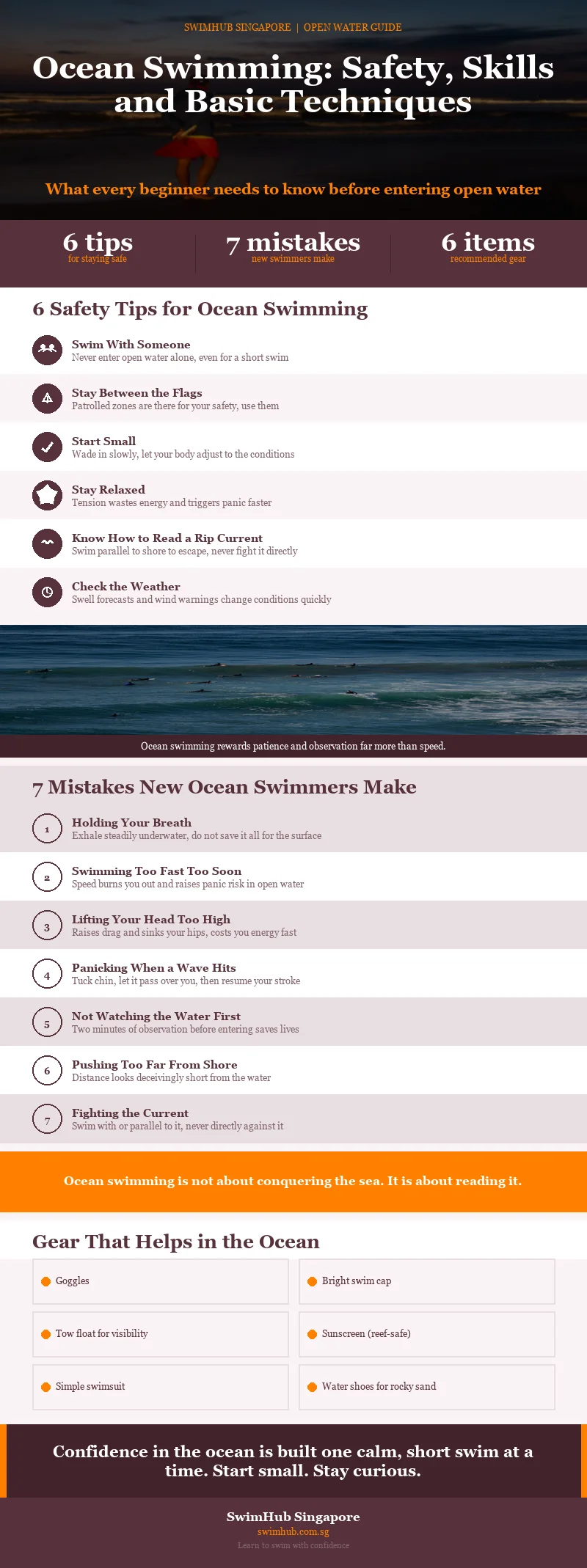
Basic Safety Tips For Ocean Swimming
Safety is the first thing you learn. Once you feel safe, the swimming part becomes easier.
Swim With Someone
Even strong swimmers follow this rule. The ocean can change in seconds. A partner helps you stay calm and aware.
Stay Between The Flags
When lifeguards mark a safe area, stay in it. That zone is tested for currents, depth, and entry points.
Start Small
Stay near the shore until you feel steady. There is no need to rush far out.
Stay Relaxed
Panic wastes energy. Slow breathing helps you stay steady. If you ever feel unsure, float on your back and slow your breath.
Know How To Read A Rip Current
Rip currents pull you outward, not down. If you get caught in one, stay calm and swim sideways until you exit the pull. Do not fight directly against it.
Check The Weather
Wind, storms, and strong tides can change the sea quickly. When in doubt, skip the swim.
These simple habits make a big difference.
Warm-Up Exercises Before Swimming
Your body reacts better in cold or moving water when you warm up first. You do not need anything complex. Just get your muscles awake and your joints loose.
You can try these warm-up exercises before swimming:
- arm circles
- shoulder rolls
- light stretching for the chest and back
- slow leg swings
- gentle breathing to settle your mind
Even two or three minutes help your body adjust.
Basic Techniques For Ocean Swimming
Learn To Move With The Waves
Do not fight the waves. Let them lift you. When a small wave comes, glide over it. When a bigger one comes, either go under it or let it pass before you continue.
Keep Your Body Long
A long body floats better. Straighten your legs and keep your head neutral. The ocean supports you more than you think.
Breathe Steady
Your breathing pattern matters. You need a rhythm that stays steady even when the water moves. Many people struggle with how to breathe while swimming in open water because they panic when a wave hits their face. Turning your head calmly and keeping one eye underwater helps.
Use Your Senses
The ocean sounds different. The light changes. The water feels colder. All these signals help you stay aware. The more you swim, the more your body understands these signals without thinking.
Choosing The Right Stroke In The Ocean
You can use any stroke you want. The sea does not require one specific style. What matters is how comfortable you feel. Some people like the same stroke they use in the pool. Others mix strokes depending on conditions.
Here is a simple guide using basic types of swimming strokes:
Freestyle
Most ocean swimmers choose freestyle because it feels smooth in moving water. It lets you move forward steadily and adjust your breathing.
Breaststroke
Good for sightseeing or when you need to recover. It keeps your head above water and helps you relax.
Backstroke
Useful when you want to rest. It lets you breathe freely. But you need to stay aware of where you are going.
Sidestroke
Good for saving energy. Slow and steady. Easy to maintain for long distances.
You can switch strokes anytime. You are not in a pool race. You are simply managing the water and your comfort level.
Building Confidence In Open Water
Confidence grows with experience. And experience grows with small steps. Start with short swims near the shore. Once you feel calm there, move a bit farther. Do not push distance too fast. The goal is comfort, not speed.
Here are simple habits that help:
- float often
- practice slow breathing
- take breaks when you need
- avoid rushing
- stay near lifeguards
- swim in familiar locations before trying new ones
The ocean rewards patience. Every calm, steady session builds trust between you and the water.
Improving Your Endurance In The Ocean
Moving water adds resistance. Even small waves make your body work harder. This helps build strength and stamina without you noticing.
To get better endurance:
- swim longer at a slow pace
- keep your body relaxed
- take short breaks
- stay consistent each week
Consistency matters more than intensity.
How To Deal With Waves And Currents
Waves
When a wave comes, be ready. Decide if you will:
- swim over it
- go under it
- wait for it to pass
Going under is easy. You push down slightly and let the wave roll over you.
Currents
Currents move sideways or outwards. You cannot stop them. But you can work with them.
If a current pulls you sideways, stay calm and angle your body gently to move across it. Rushing or fighting the current only drains energy.
Keeping Calm In Deep Water

Deep water feels scary for many people. The key is to learn how to trust flotation. Your body floats more in salt water than in a pool. This is why ocean swimming can feel surprisingly stable once you stop forcing movement.
Try this:
- roll on your back
- let your ears sink underwater
- keep your chest open
- breathe slow and steady
Your body will float with very little effort.
Common Mistakes New Ocean Swimmers Make
A lot of beginners make the same errors. These common swimming mistakes happen because most people try to use pool habits in open water.
Here are some mistakes to avoid:
- holding your breath
- swimming too fast too soon
- lifting your head too high
- panicking when a wave hits
- entering the water without watching it first
- pushing too far from shore
- fighting the current
When you slow down and observe the water, these mistakes fade.
Gear That Helps In The Ocean
You do not need much, but a few things can make the swim easier:
- goggles
- a bright swim cap
- a tow float
- sunscreen
- a simple swimsuit
- water shoes if the sand has rocks
A tow float is especially helpful because it keeps you visible and gives you something to hold if you need a break.
What To Do After An Ocean Swim
Your body needs a bit of care after any open-water session.
You can:
- rinse off the salt
- drink water
- eat something light
- stretch your shoulders and legs
- rest a bit before driving home
Salt water pulls moisture from your skin, so rinsing helps you stay comfortable.
Conclusion On Ocean Swimming
Ocean swimming can feel new and strange at first, but it becomes calming and enjoyable when you learn the basics. The sea teaches you patience, awareness, and steady breathing. Once you understand how to read the water, move with the waves, and stay relaxed, the experience becomes smooth instead of stressful. The key is simple habits, not speed or perfection.
If you want swim gear that supports your sessions, check out Swimhub. We offer a range of tools and equipment to help you feel safer and more prepared in the water. Visit our site to see how we can help you enjoy every swim with more comfort and confidence or get in touch with our team.
Frequently Asked Questions About Ocean Swimming
Is Ocean Swimming Safe For Beginners?
Yes, as long as you choose a lifeguarded beach, stay close to shore, and swim with someone. Start small and build confidence slowly.
What Should I Do If A Wave Hits My Face While Swimming?
Stay calm and turn your head back to the side. Slow breathing helps you stay relaxed. Waves are normal and you learn to move with them.
Do I Need To Train In A Pool First Before Going Into The Ocean?
Pool experience helps, but you can learn both at the same time. Ocean swimming feels different, so take it slow at first.
How Do I Handle Deep Water If I Get Nervous?
Roll on your back and float. Salt water gives you extra support. Breathe slow until you feel steady again.
Is Ocean Swimming Good For Fitness?
Yes. The moving water adds natural resistance, which helps build strength and stamina without heavy strain on the body.
