

Pregnancy is a time filled with joy, anticipation, and many questions, especially about safe activities like swimming while pregnant. As your belly grows, you want an activity that eases aches and feels safe for both you and your baby.
You’ve likely heard it’s a gentle, low-impact option, but it’s natural to have questions. “Is it really safe for the baby?” “What about public pools or the ocean?” “And what are the real benefits?”
This article will dive into those key safety questions, explore the amazing benefits, and give you the confidence to take the plunge.
Is It Safe to Go Swimming While Pregnant?
For the vast majority of pregnancies, swimming is exceptionally safe and highly recommended by doctors. However, it’s still important to know which types of water are safest and which specific medical conditions warrant staying on dry land.
Pool, Ocean, or Lake: Where is it Safe to Swim?
- Swimming Pools: This is generally the safest and most reliable option. A well-maintained, chlorinated pool is considered perfectly safe for pregnant women. The chlorine levels are not harmful to you or your baby.
- Oceans and Seas: Swimming in the ocean can be fine, but be mindful of a few things:
- Currents: Avoid strong riptides or rough surf.
- Water Quality: Swim at beaches with good water quality reports, avoiding areas near storm drains.
- Temperature: Avoid water that is excessively cold.
- Lakes and Ponds: These pose the highest risk due to potential bacteria (like E. coli) and other contaminants, especially in stagnant water. It’s generally best to skip lakes and ponds unless you are certain the water is clean and safe for swimming.
When You Should Not Go Swimming
Always talk to your doctor or midwife before starting any new exercise routine. They will likely advise you to avoid swimming if you have:
- A high-risk pregnancy
- Placenta previa (after 26 weeks)
- Vaginal bleeding or leaking fluids
- A ruptured membrane (your water has broken)
- Preterm labour or contractions
- An incompetent cervix
Trust your body. If something feels off, stop and consult your healthcare provider.
Swimming Through Your Trimesters
- First Trimester: Swimming can be a lifesaver for tackling early pregnancy fatigue and nausea.
- Second Trimester: This is often the “golden” period for exercise. You have more energy, and swimming is a great way to maintain fitness.
- Third Trimester: This is when the weightless magic of the pool feels best! Continue swimming for as long as you feel comfortable. You may need to adjust your strokes (e.g., breaststroke can sometimes strain the pelvis, so see how you feel).
Why Swimming is the Perfect Pregnancy Workout
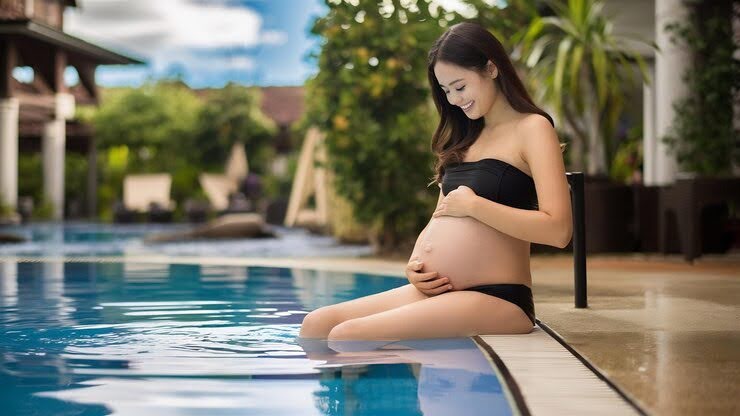
Unlike running or other high-impact activities, swimming is uniquely suited for pregnancy. The buoyancy of the water supports your growing belly, joints, and ligaments, which are often under strain. This weightless feeling gives you a freedom of movement you just can’t get on land, especially in the later trimesters.
It’s a cardiovascular workout that’s gentle on the body, allowing you to stay fit without the risk of overheating or injury.
7 Amazing Benefits of Swimming While Pregnant
1. Relieves Pressure And Aches Instantly
As your bump grows, the weight pulls on your lower back, hips, and knees. This extra pressure can make everyday activities feel tiring or even painful. The moment you step into the water, it’s like the weight lifts off your body.
You feel light, free, and able to move without discomfort. The buoyancy of the water supports your belly, allowing your joints and muscles to relax in a way that’s hard to find on land. Even floating for a few minutes can bring soothing relief to sore or tight areas.
2. Improves Blood Flow And Reduces Swelling (Edema)
Swollen feet, heavy legs, and tired ankles are common in pregnancy, especially during the later months. Swimming helps to gently stimulate blood flow throughout your body. As you glide through the water, your muscles contract and relax without too much effort, encouraging your blood to circulate better.
This helps reduce water retention, lowers swelling, and may even prevent varicose veins from forming or worsening. Your legs feel lighter, and you’ll likely notice a difference even after a short swim.
3. Helps You Stay Cool And Comfortable
Many pregnant women deal with feeling too warm, even when the air conditioning is on. Hormonal changes and extra blood volume can make your body feel overheated faster than usual. When you’re in the pool, your body temperature naturally regulates.
The water cools you down gently and evenly, so you feel refreshed without sweat. This simple comfort is a real game-changer for those living in warm climates or going through pregnancy during hotter months.
4. Strengthens Key Muscle Groups Safely
One of the biggest perks of swimming while pregnant is that it works several major muscle groups at the same time, your arms, back, shoulders, legs, and especially your core. These muscles all play an important role in supporting your growing body and preparing for childbirth.
For example, strengthening your core and back can help reduce backaches, improve posture, and make it easier to carry the extra weight of your bump. Unlike high-impact workouts, swimming works these muscles gently, without putting stress on your joints or risking injury.
5. Lifts Your Mood And Clears Your Head
Let’s not forget the emotional side of things. Pregnancy can be overwhelming, with shifting hormones, physical changes, and lots on your mind. Swimming offers a peaceful escape.
There’s something calming about the rhythm of your movements, the quiet of being underwater, and the water’s gentle resistance as you move. It can become your personal time to recharge, breathe, and feel like yourself again. Many pregnant women say they leave the pool feeling lighter, not just physically but mentally, too.
6. Promotes Better Sleep
Many pregnant women struggle with insomnia or poor sleep quality. A gentle swim can help you expend excess energy and relax tense muscles, leading to a deeper, more restorative sleep.
7. Improves Your Body’s Stamina
Labour is an endurance event! Swimming is a fantastic cardiovascular exercise that builds stamina and improves your body’s ability to use oxygen, both of which will be a huge help when the big day arrives.
How to Get Started with Pregnant Swimming
If you’re new to pregnant swimming or feeling a little unsure, here are some easy ways to make the most out of it:
- Start slow: Listen to your body. A gentle 20-minute swim is a fantastic start.
- Stay hydrated: Just because you’re in water doesn’t mean you’re not sweating.
- Get a Good Suit: Invest in a comfortable, supportive maternity swimsuit.
- Avoid overly warm pools: Overheating is a real risk. Stick to pools with a comfortable temperature (ideally not warmer than 32°C or 90°F).
- Choose strokes wisely: Breaststroke is often a favourite among pregnant swimmers, but feel free to adjust according to your comfort.
- Stay safe: Wet surfaces are slippery. Wear non-slip shoes and walk carefully around the pool deck.
Conclusion About Swimming While Pregnant
Swimming while pregnant is one of the best things you can do for your changing body and mind. It’s a safe, low-impact way to ease aches, build strength for labour, and find a moment of peace.
We know you want the best for you and your baby, and a guided class can provide safety, structure, and a community of other moms-to-be. We also offer programs for the whole family, from toddler swimming lessons to kids’ lessons and adult classes.
If you’re in Singapore and looking for expert guidance, our experienced SwimHub female swimming instructors are here to help. For any assistance in finding the perfect pregnancy-friendly lesson, please feel free to contact us today.
Frequently Asked Questions About Swimming While Pregnant
Can Pregnant Women Swim In The First Trimester?
Yes, swimming is usually safe during the first trimester. It’s a great low-impact exercise to help with early pregnancy symptoms like fatigue and nausea.
Is It Safe To Swim Every Day While Pregnant?
For most women, swimming daily is fine as long as they feel comfortable and energetic. Always listen to your body and rest when needed.
What Is The Best Swimming Stroke For Pregnancy?
Breaststroke is often recommended because it’s gentle on the body and encourages good posture. However, you can choose the stroke that feels best for you.
Are Public Pools Safe For Pregnant Women?
Yes, public pools are generally safe as long as they are well-maintained. Just make sure the water is clean and properly chlorinated.
Can Swimming Help With Labour Preparation?
Absolutely! Swimming strengthens your core muscles, improves stamina, and boosts circulation, all of which can make labour a little more manageable.
What Should I Wear For Swimming While Pregnant?
A supportive maternity swimsuit or a regular one-piece that feels comfortable around your bump is perfect. Choose something that lets you move freely.
When Should I Stop Swimming During Pregnancy?
You can continue swimming right up until delivery unless advised otherwise by your doctor. Stop if you feel dizzy, experience contractions, or if your waters break.
